
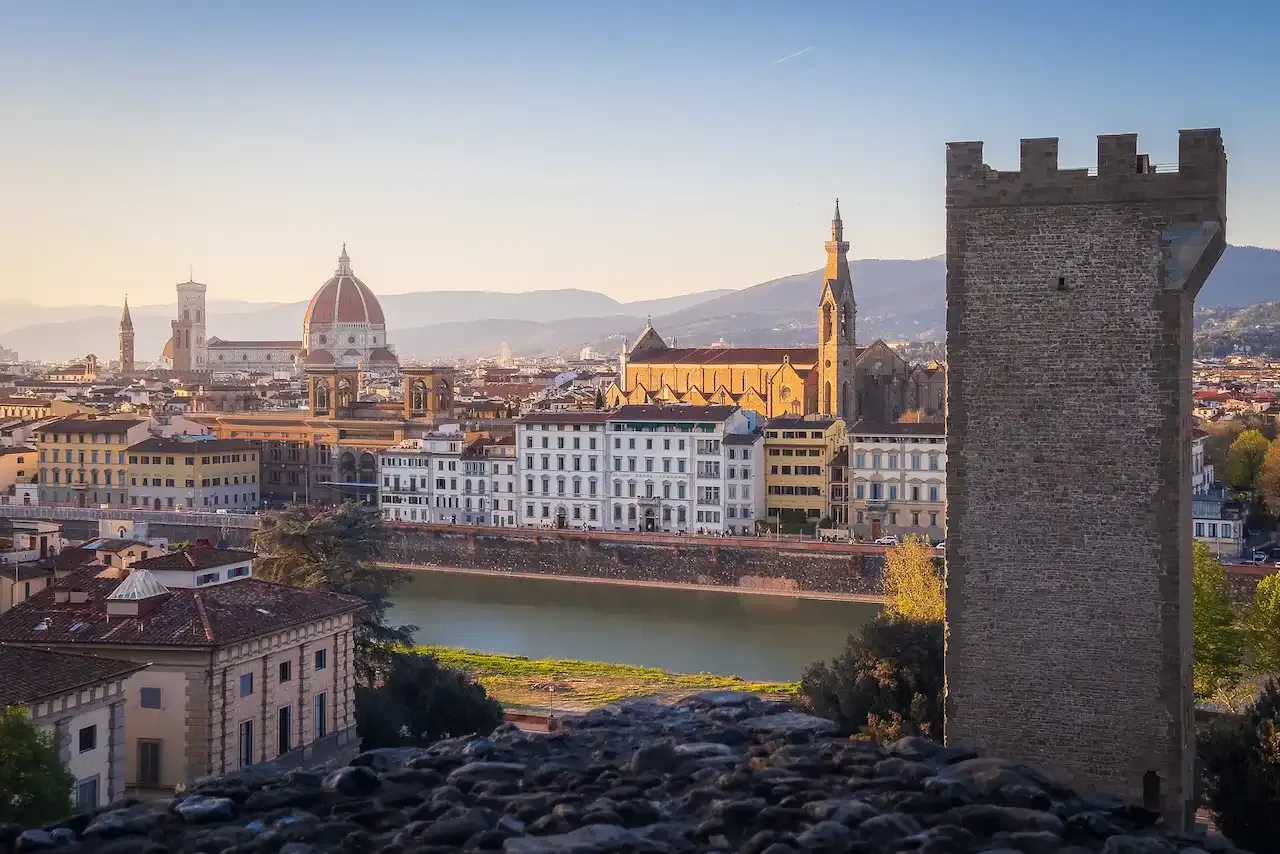
Florence Historic Sites
Exploring Florence historic sites reveals the architectural and artistic evolution of the Tuscan capital. The city features a dense concentration of preserved monuments, including Gothic churches, Renaissance palaces, historic bridges, public squares, and landscaped royal gardens.
What are the historic sites in Florence?
Visitors exploring the Tuscan capital encounter a preserved urban center shaped by centuries of artistic patronage, political power, and religious authority. World-renowned Florence attractions showcase the transition from medieval civic structures to Renaissance masterpieces across the city.
1. Duomo Florence (Cathedral of Santa Maria del Fiore)
The Cathedral of Santa Maria del Fiore stands as one of the most prominent historical sites in Florence, Italy. Construction began in 1296 under Arnolfo di Cambio and concluded in 1436 with Filippo Brunelleschi's completion of the massive brick dome. The exterior features polychrome marble panels in green, pink, and white.
Next to the cathedral, Giotto's Campanile rises 84 meters, while the Battistero di San Giovanni showcases Lorenzo Ghiberti's bronze Doors of Paradise. The complex represents the architectural center of Renaissance Florence. Visitors explore the nave, climb 463 steps to the top of the dome, and view preserved mosaics that demonstrate the engineering advancements of the 15th century.
2. Uffizi Gallery
Giorgio Vasari designed the Uffizi Gallery in 1560 to house administrative offices for the Medici magistrates. Today, the complex ranks among the premier historical places in Florence. The gallery contains a collection of Renaissance paintings, including Sandro Botticelli's The Birth of Venus and Primavera, alongside masterworks by Leonardo da Vinci, Michelangelo, Raphael, and Titian. The long corridors display classical Greek and Roman sculptures acquired by the Medici family over centuries.
The upper floor provides views of the Arno River and the Ponte Vecchio. Architectural elements, such as the vaulted ceilings decorated with grotesque frescoes, preserve the structural heritage of 16th-century Florentine statecraft and artistic patronage.
3. Accademia Gallery
Founded in 1784 by Grand Duke Peter Leopold, the Accademia Gallery served as a teaching collection for students at the Academy of Fine Arts. The venue stands among the top Florence landmarks historic sites due to its holdings of Renaissance sculpture.
Michelangelo's original David moved from Piazza della Signoria to the gallery in 1873 to protect the marble from weathering. The main hall displays Michelangelo's unfinished Prisoners, created for the tomb of Pope Julius II. The museum also houses an extensive collection of Florentine Gothic paintings, musical instruments from the Medici court, and plaster casts produced by 19th-century sculptors working in Italy.
4. Palazzo Vecchio
Constructed in 1299 by Arnolfo di Cambio, the Palazzo Vecchio served as the seat of the Florentine Republic and later as the primary residence of Duke Cosimo I de' Medici. The building represents one of the pivotal Florence historic sites. The facade features rusticated stone, medieval battlements, and the 94-meter Arnolfo Tower.
Inside Palazzo Vecchio, the Salone dei Cinquecento displays monumental wall frescoes by Giorgio Vasari and sculptures by Michelangelo. The upper levels house the private apartments of Eleonora of Toledo, the Hall of Geographical Maps, and the secret Studiolo di Francesco I. Excavations underneath the foundation reveal the remains of an ancient Roman theater.
5. Pitti Palace
Luca Pitti commissioned the residence in 1458 before the Medici family purchased the property in 1549 to serve as their official royal palace. The Pitti Palace ranks among the notable historical sites in Florence, Italy. The massive stone complex later housed the Lorraine and Savoy dynasties.
Today, the palace contains several distinct exhibition spaces. Key highlights of what to see at Pitti Palace include the Palatine Gallery, which displays works by Raphael, Titian, and Rubens in their original 17th-century arrangements. Visitors explore the Royal Apartments, the Treasury of the Grand Dukes, and the Gallery of Modern Art, observing how three ruling dynasties preserved luxury decorative arts, textiles, and furniture across four centuries.
6. Boboli Gardens
Eleonora of Toledo acquired the hillside behind Pitti Palace in 1550, commissioning Niccolò Tribolo to design an expansive outdoor sanctuary. The site ranks among the main historical places in Florence for Renaissance landscape architecture. The gardens established an outdoor layout that influenced European royal courts, including Versailles.
Statues from ancient Rome and the Mannerist period line gravel pathways that lead past manicured hedges, fountains, and stone amphitheaters. Key features include Bernardo Buontalenti's Grotta del Buontalenti, the Fountain of Neptune, and the Isolotto basin. The elevated terraces offer views across Florence while demonstrating 16th-century hydraulic engineering, formal botany, and classical sculpture integration.
7. Medici Chapels
Located at the Basilica of San Lorenzo, the Medici Chapels complex served as the official burial ground for members of the Medici family. The crypt holds the tombs of 49 Medici family members, displaying centuries of dynastic patronage, funerary architecture, and stone inlay craftsmanship known as commesso fiorentino.
The site represents one of the famous monuments in Florence, comprising two major structures:
- The Sagrestia Nuova, designed by Michelangelo between 1520 and 1534, features sculpted allegorical tomb figures depicting Night, Day, Dawn, and Dusk.
- The Chapel of the Princes showcases Baroque lapidary work with walls encrusted in colored marbles, jasper, and semi-precious stones.
8. Ponte Vecchio
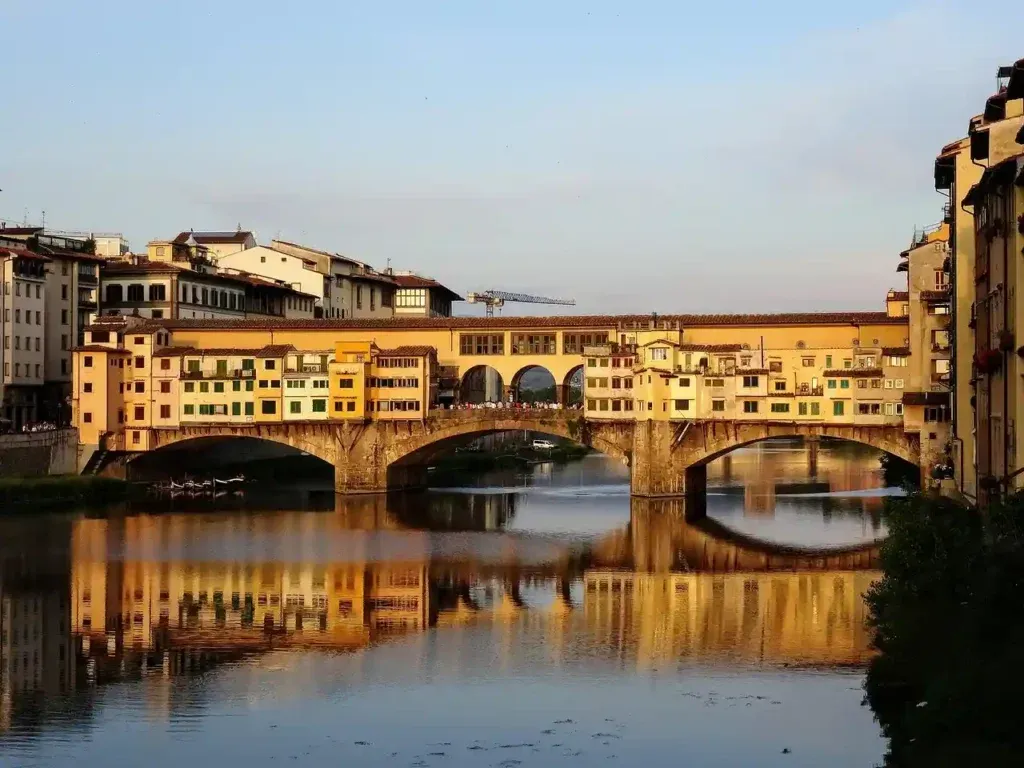
Rebuilt in 1345 following a destructive flood, the stone segmental arch bridge crosses the narrowest point of the Arno River. The structure is one of the premier Florence landmarks historic sites.
Merchants originally operated butcher shops along the bridge until Grand Duke Ferdinando I evicted them in 1593 to eliminate foul odors, replacing them with goldsmiths and jewelers. Giorgio Vasari constructed the enclosed Vasari Corridor over the shops in 1565, allowing the Medici family to walk safely between Palazzo Vecchio and Pitti Palace. The bridge survived World War II intact when retreating forces destroyed all other bridges in Florence.
9. Basilica of Santa Croce
9. Basilica of Santa Croce
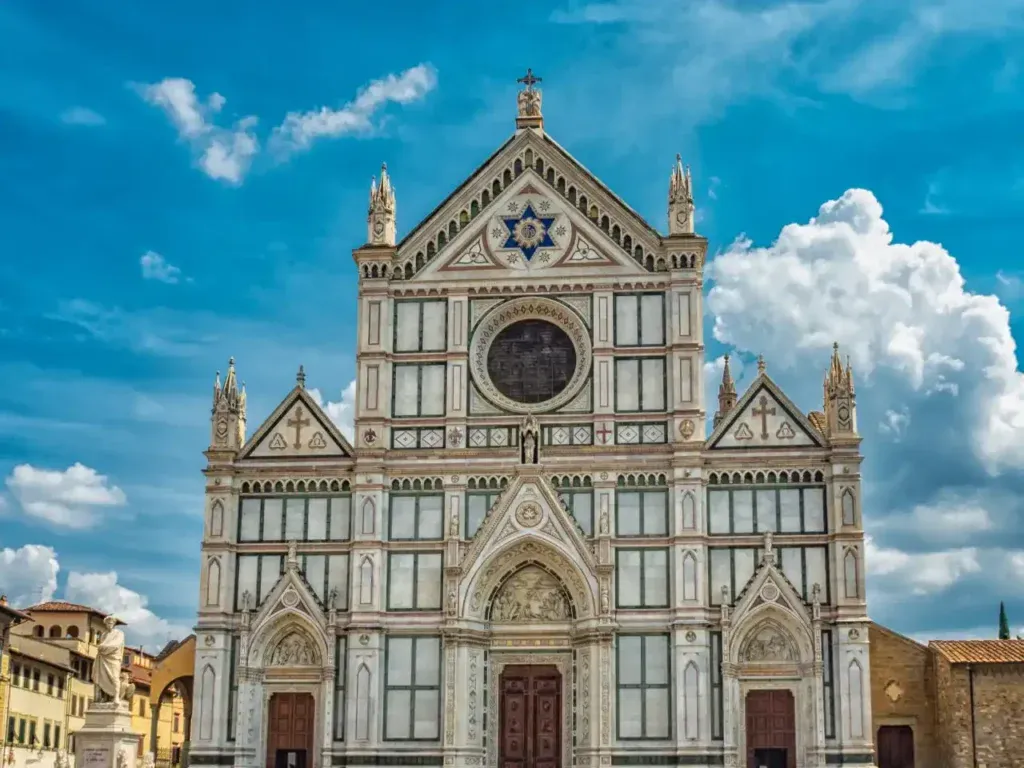
The Franciscan order began constructing the church in 1294, using designs attributed to Arnolfo di Cambio. The venue remains one of the fundamental Florence historic sites. The basilica contains the tombs of major Italian figures, including Michelangelo, Galileo Galilei, Niccolò Machiavelli, and Gioachino Rossini.
The interior features fresco cycles by Giotto in the Bardi and Peruzzi chapels, depicting the life of Saint Francis. Filippo Brunelleschi designed the adjacent Pazzi Chapel, a masterpiece of early Renaissance proportional architecture. The complex also houses a large cloister, a refectory displaying Taddeo Gaddi's Tree of Life, and a leather workshop operating within former monastic quarters.
10. Basilica of Santa Maria Novella
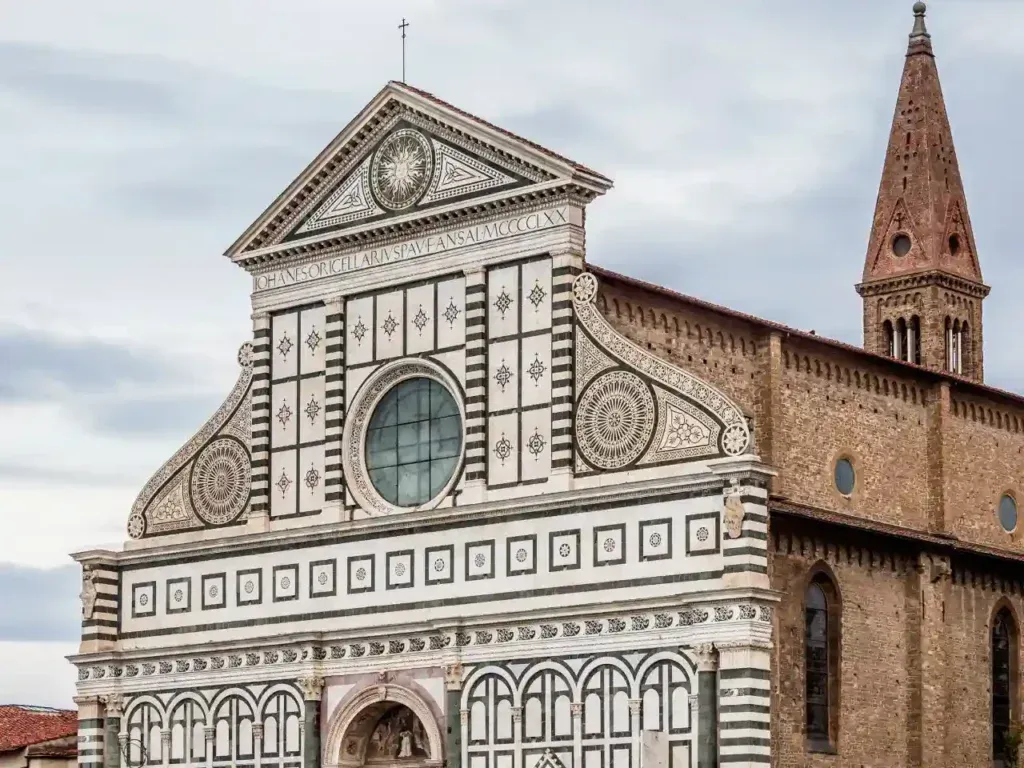
Dominican friars began constructing the church in 1279, completing the Gothic structure in 1357. The venue stands out among historical sites in Florence italy due to its exterior facade. Leon Battista Alberti designed the upper marble facade in 1470, incorporating classical proportions and geometric patterns.
Inside, the basilica houses Masaccio's Holy Trinity, a landmark painting from 1427 that established linear perspective in Renaissance art. Additional masterpieces include Domenico Ghirlandaio's frescoes in the Tornabuoni Chapel and Giotto's crucifix in the central nave. The complex includes the Green Cloister and the Spanish Chapel, featuring 14th-century fresco cycles depicting religious doctrine.
11. Bargello National Museum
Constructed in 1255 as the Palazzo del Popolo, the Bargello National Museum served as the headquarters for the Captain of the People and later as a prison. Today, the venue represents one of the major Florence museums.
The building now functions as the National Sculpture Museum of Italy. The courtyard displays stone coats of arms and an open-air staircase. Inside, the galleries contain early works by Renaissance sculptors, including Donatello's bronze David and St. George, Michelangelo's Bacchus, and Gian Lorenzo Bernini's Bust of Costanza Bonarelli. The collection also showcases medieval ivories, Renaissance bronzes, glazed ceramics, and armor.
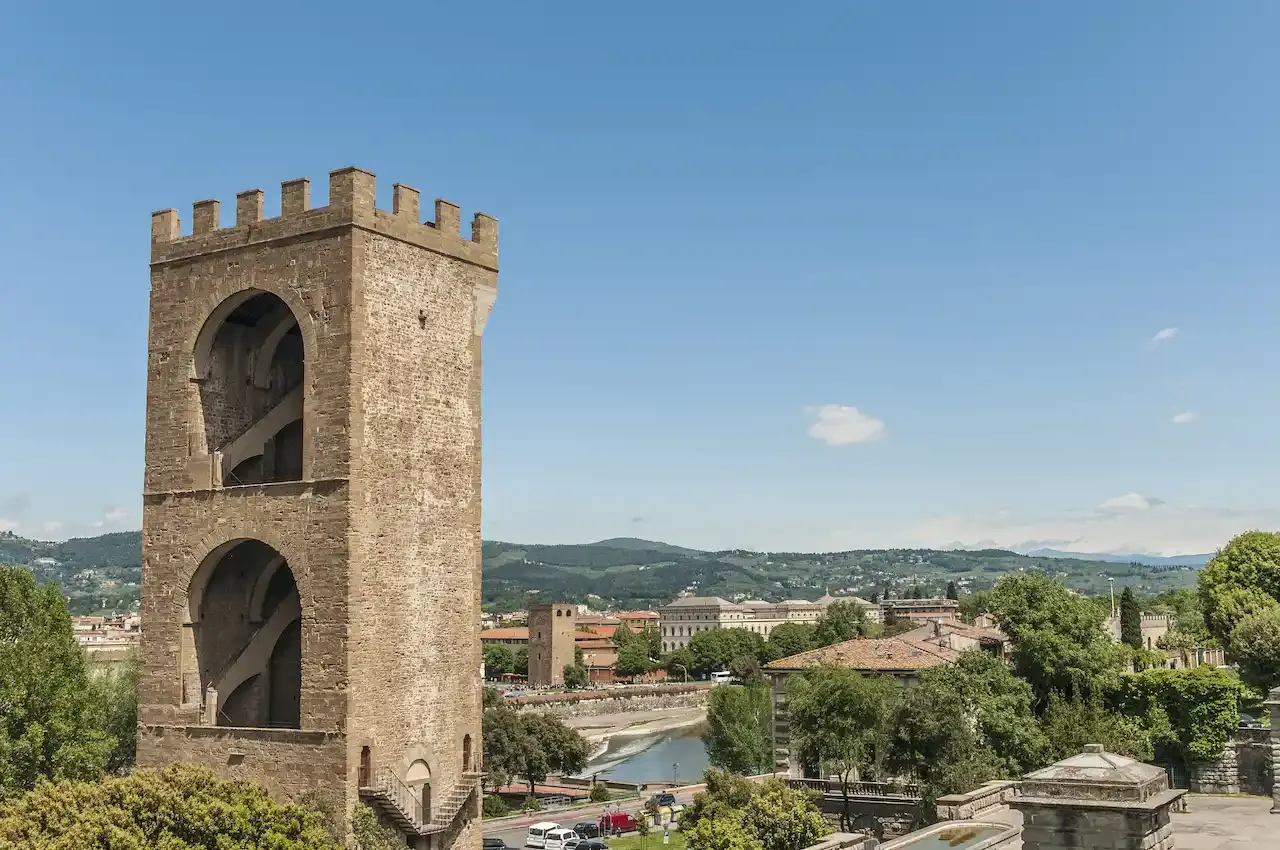
12. Torre San Niccolò
Built in 1324 as part of the 6th set of defensive city walls, the tower guarded the southeastern approach to Florence. The structure stands out among Florence landmarks historic sites as the only medieval gate tower that retained its original height when 19th-century urban redesigns dismantled most of the defensive walls.
Designed with defensive battlements and open archways on the interior side, the tower allowed guards to monitor incoming traffic across the Arno River. Visitors climb 160 steps through the multi-level interior to reach the top terrace, which provides panoramic views of the historic center, the Oltrarno district, and the surrounding Tuscan hills.