
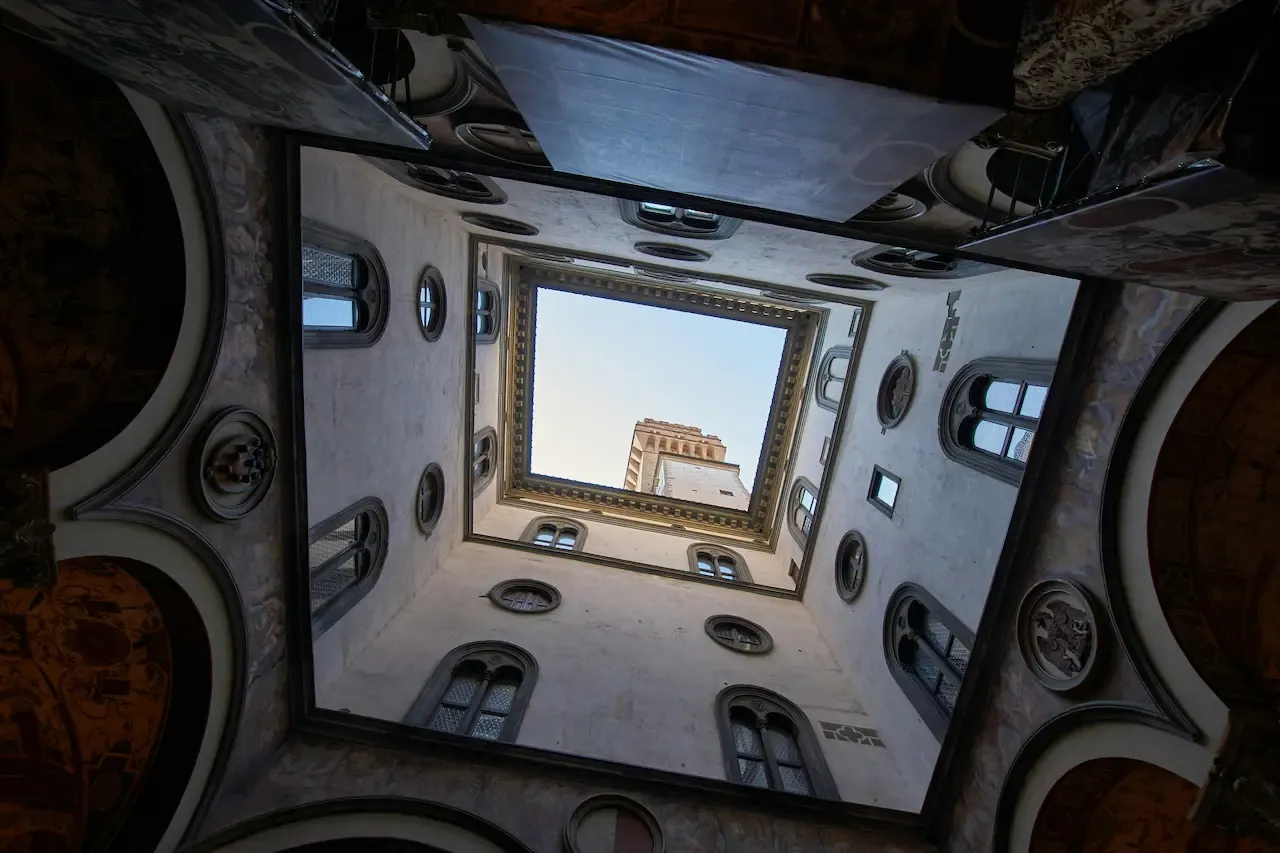
Inside Palazzo Vecchio
Tourists visiting Florence discover centuries of history, art, and politics inside Palazzo Vecchio. The venue contains historical council chambers, private royal apartments, hidden passages, and preserved archaeological remains. Understanding the layout of the different floors and the iconic statues standing at the entrance helps guests navigate the Palazzo Vecchio interior effectively.
What is inside the Palazzo Vecchio?
Travelers exploring inside Palazzo Vecchio discover a complex network of courtyards, government halls, and private apartments that reflect centuries of Florentine history:
Cortile di Michelozzo
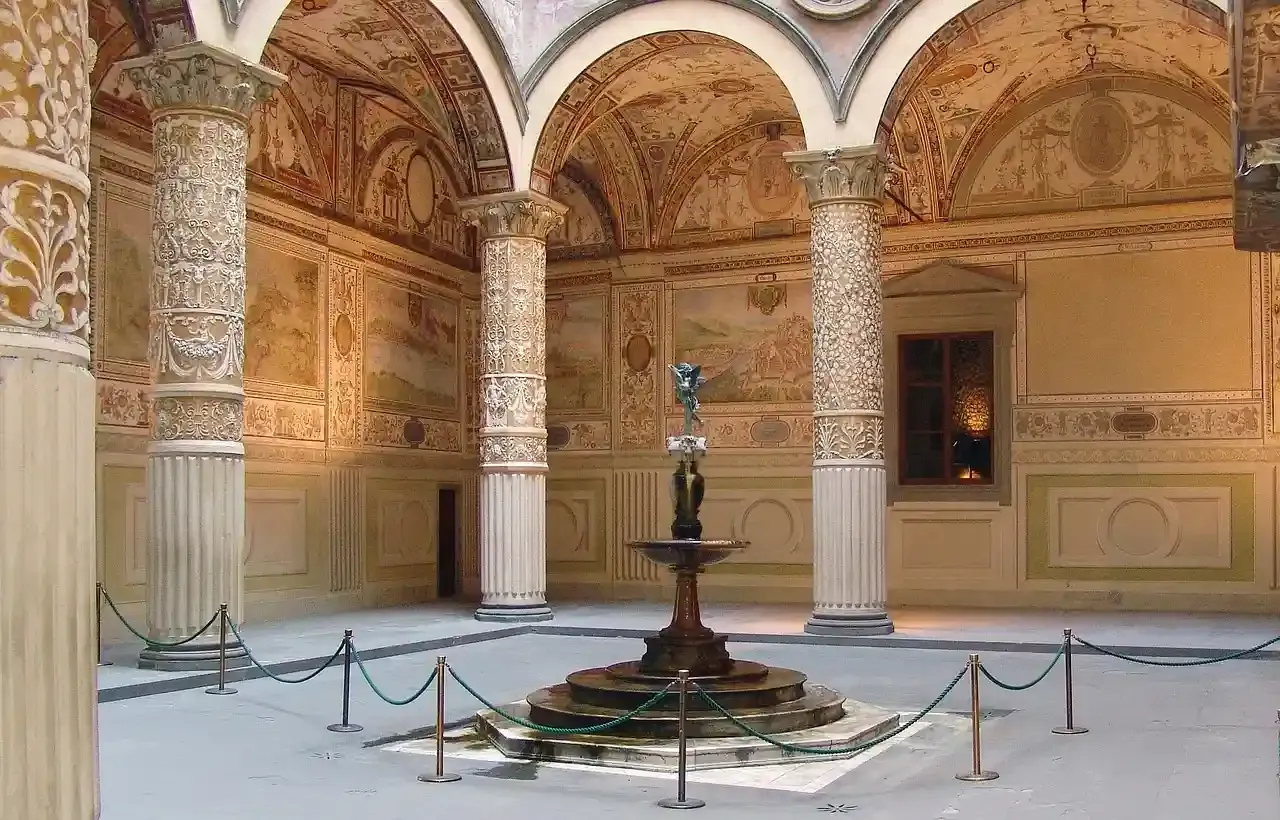
Cortile di Michelozzo
Visitors enter the building through the Cortile di Michelozzo, a Renaissance courtyard designed in the fifteenth century. Artists decorated the courtyard walls with frescoes representing Austrian cities to celebrate the marriage of Francesco I de' Medici and Joanna of Austria.
A porphyry fountain featuring a replica of Andrea del Verrocchio's Putto with Dolphin stands in the center of the space. The courtyard also features intricate stucco work on the pillars. This open area serves as the primary transition zone between the bustling Piazza della Signoria and the quiet Palazzo Vecchio interno. The architectural layout guides guests directly toward the monumental staircases that lead to the upper floors and the main council chambers.
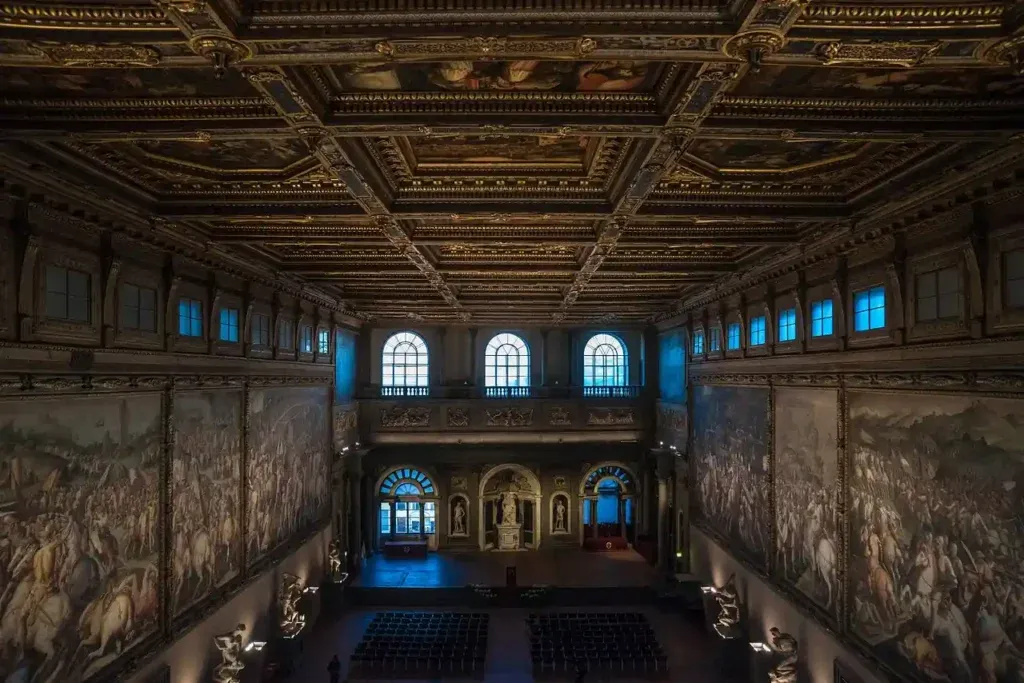
Salone dei Cinquecento
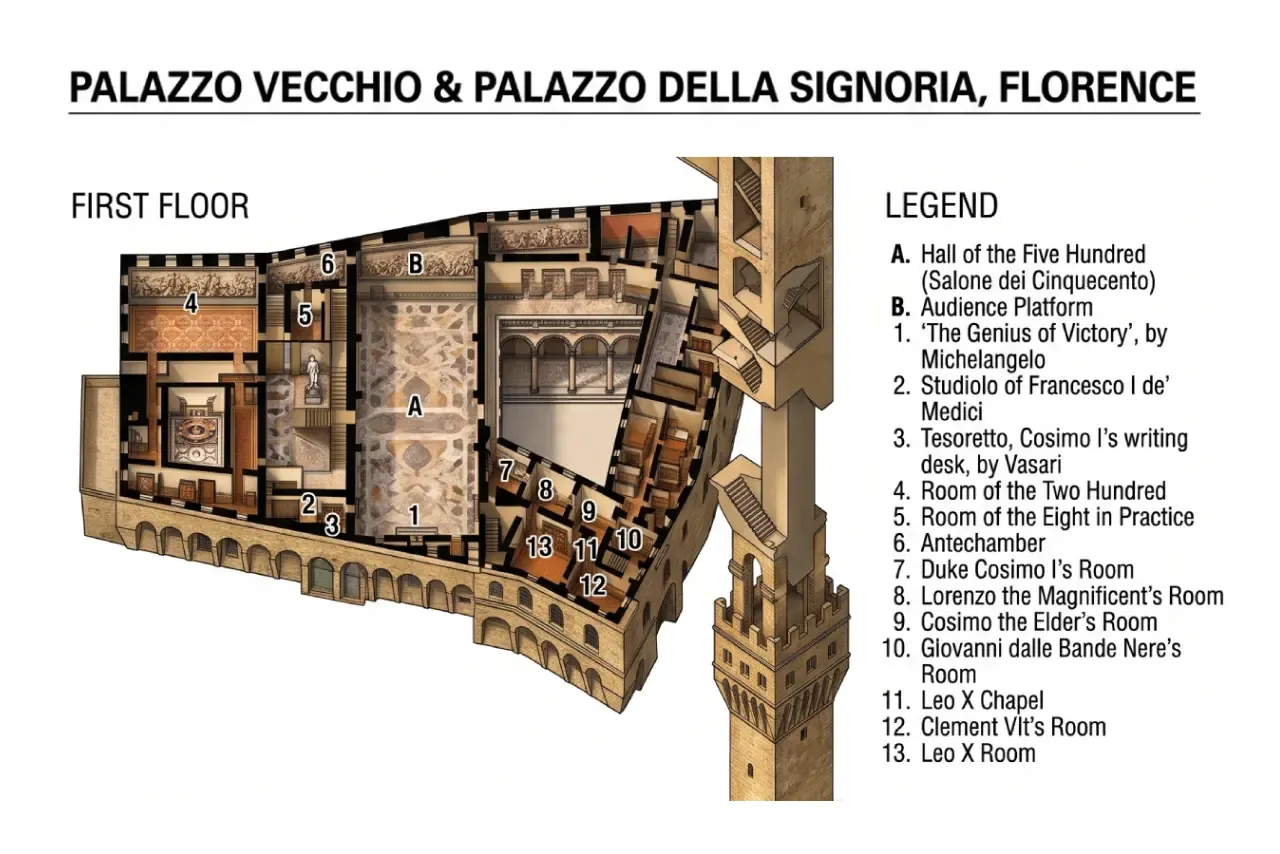
The Salone dei Cinquecento functions as the largest room inside Palazzo Vecchio. Simone del Pollaiolo built this hall in 1494 to accommodate the Grand Council of Florence, which consisted of 500 members. Later, Giorgio Vasari enlarged and transformed the room for the Medici family.
Vasari and his workshop painted the massive frescoes on the walls, which depict Florentine military victories over Pisa and Siena. The paneled ceiling features 39 paintings portraying episodes from the life of Cosimo I de' Medici. At one end of the hall, the raised stage, known as the Udienza, contains statues of prominent Medici family members. Michelangelo's sculpture, The Genius of Victory, also occupies a space in this chamber.
The Monumental Quarters
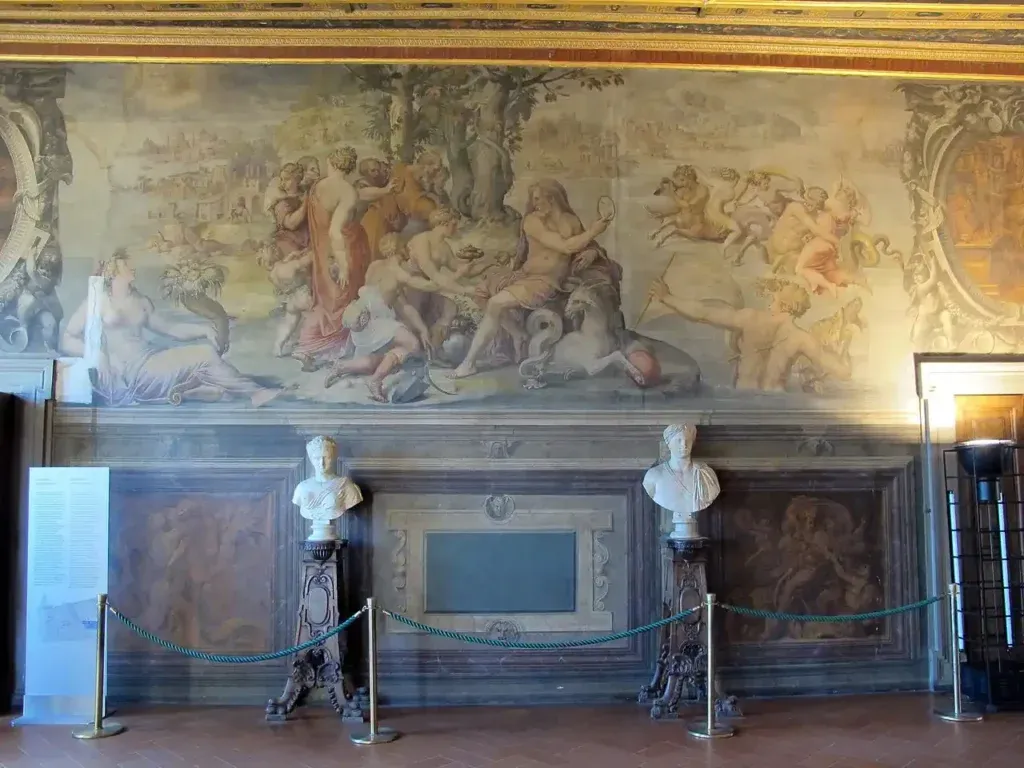
The Monumental Quarters
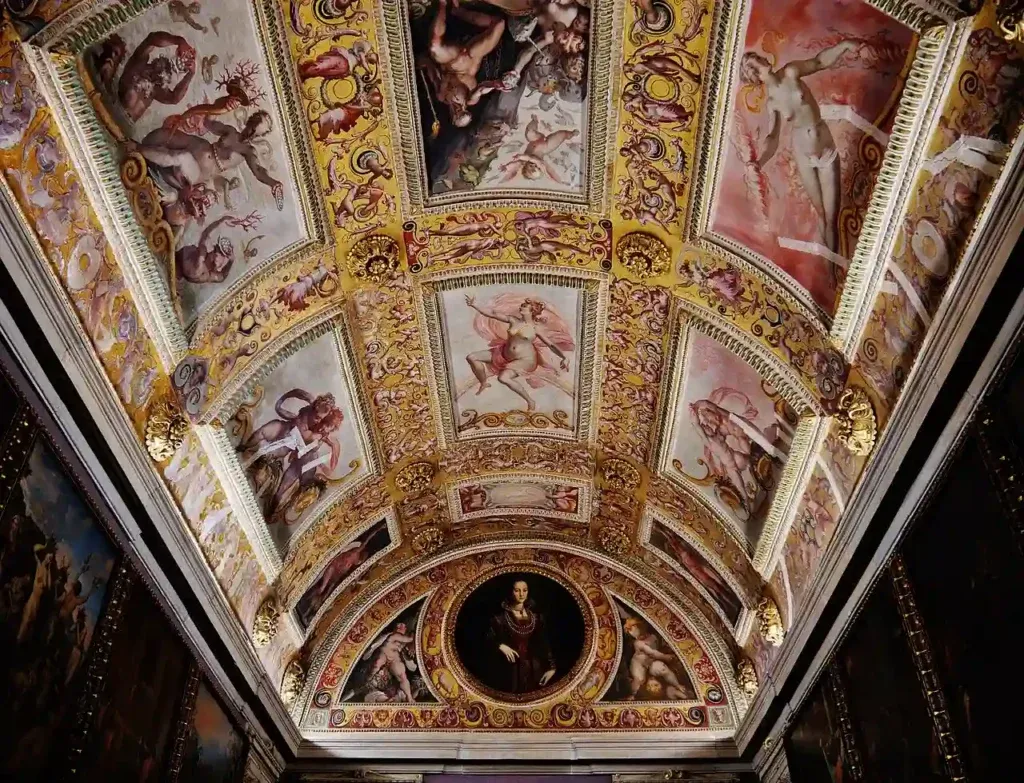
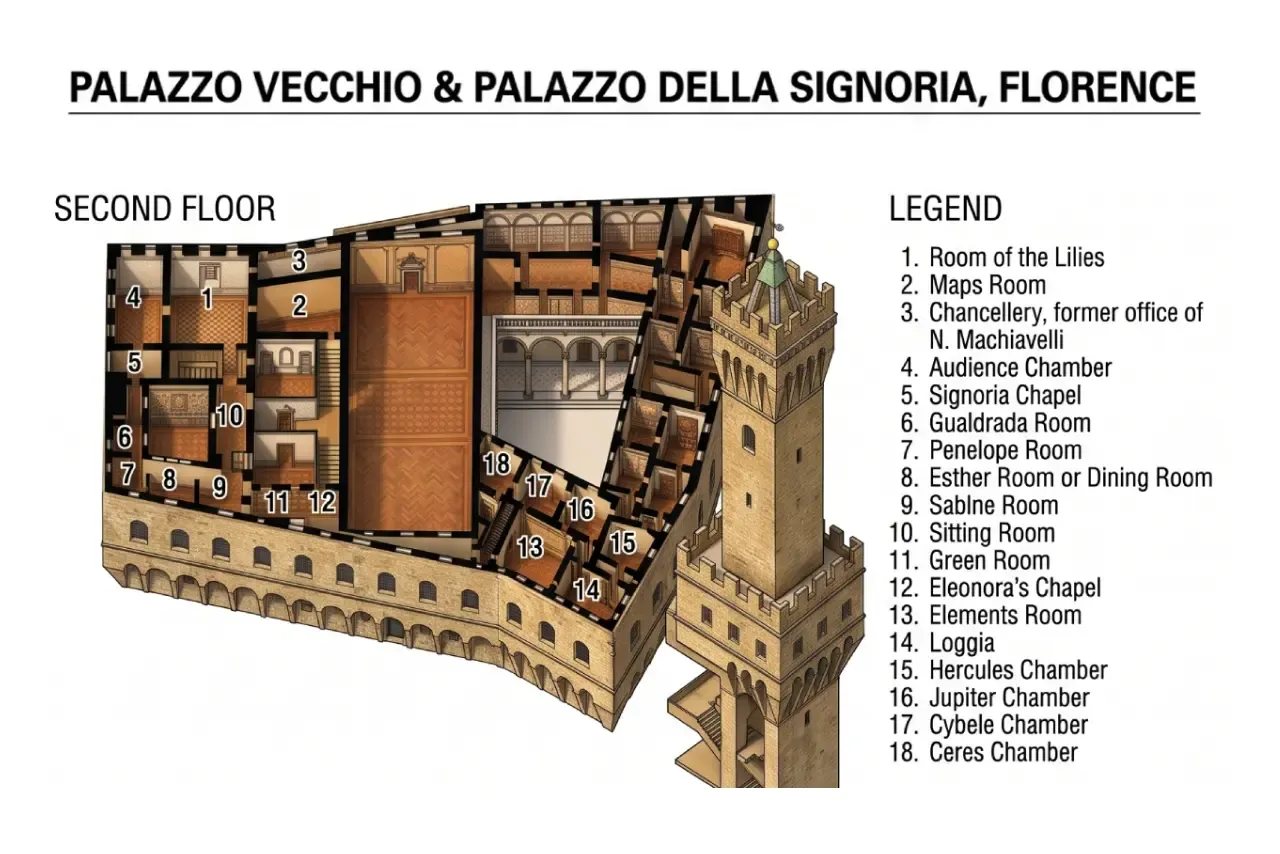
The upper floors contain the Monumental Quarters, which include the Quarters of Leo X, the Apartments of the Elements, and the Apartments of Eleonora of Toledo. Giorgio Vasari designed the Apartments of the Elements to showcase allegorical representations of water, fire, earth, and air. The Apartments of Eleonora of Toledo served as the private residence for Cosimo I's wife. These rooms feature a private chapel decorated with frescoes by Agnolo Bronzino.
Visitors exploring this section also find the Hall of Geographical Maps, a room containing 53 hand-painted maps from the sixteenth century and a large central globe. These residential areas demonstrate how the building functioned as both a government center and a palace.
Photo: "Sala degli elementi" by Sailko.
The Medici Treasure
The palace houses the Medici Treasure within protected chambers, including the secret study known as the Tesoretto. Cosimo I de' Medici commissioned Giorgio Vasari to construct this private room to store precious gemstones, goldsmith works, rare coins, and personal documents. Intricate frescoes depicting mythological allegories cover the vaulted ceiling and walls, hiding secret cabinets behind painted wooden panels.
Visitors explore these spaces to observe how the ruling family safeguarded valuable objects and state secrets. The display demonstrates the financial power, artistic patronage, and security measures of the Medici dynasty during the sixteenth century, giving insight into the personal life of the Grand Dukes.
Photo: "Studiolo di Francesco I" by Zairon.
The Archaeological Area
The Archaeological Area
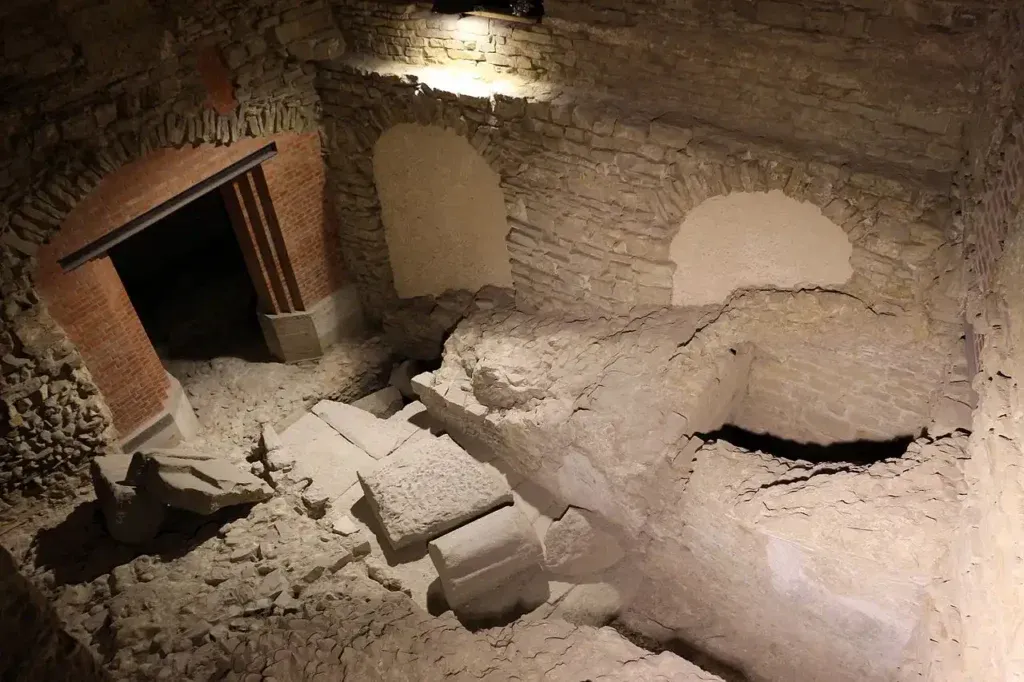
Underneath the foundation of the palace lies the archaeological area, which contains the excavated remains of the Roman theater of Florentia. Dating back to the first century AD, this site extends beneath the current structure and the surrounding streets.
Visitors walk along underground pathways to view original stone walls, brick corridors, and the cavea where spectators sat during performances. Archaeological digs revealed these ruins during modern renovation projects, uncovering layers of urban history beneath the medieval surface. The space highlights the transition of Florence from an ancient Roman colony into a Renaissance power center, providing direct physical evidence of the city's earliest urban development.
Photo: "Palazzo Vecchio, sotterranei con scavi dell'antico Teatro Romano di Firenze" by Sailko.
Map of the Palazzo Vecchio interior
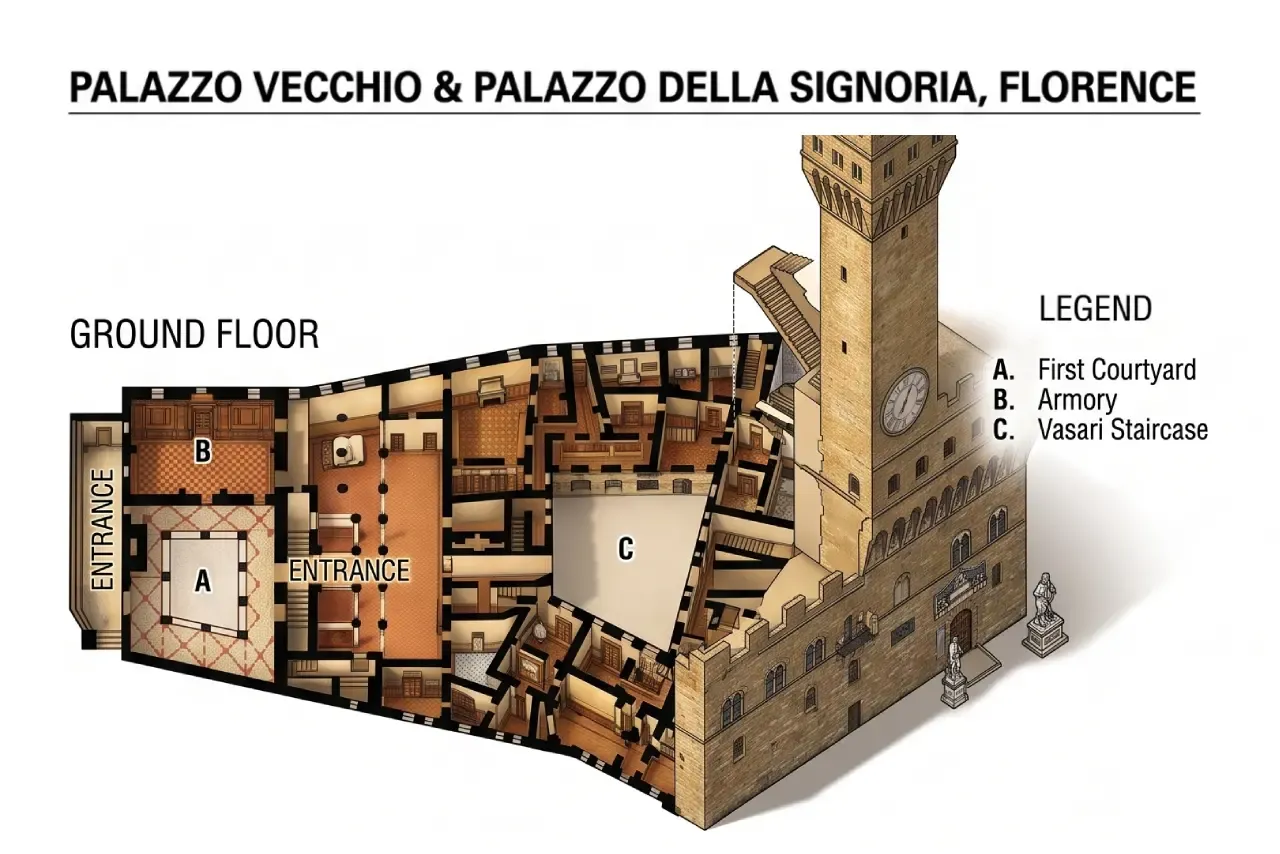
Understanding the layout across different levels helps visitors navigate the complex structure:
Ground floor
The ground floor features the main entrance points leading directly from Piazza della Signoria. Visitors enter through the First Courtyard, also known as the Cortile di Michelozzo. This level houses the Armory, which hosts temporary exhibitions and historic displays. The ground floor layout centers around the Vasari Staircase, which guides guests from the courtyard toward the upper floors and monumental council chambers.
Architecture of Palazzo Vecchio
The design of the building showcases the transition from a medieval fortress to a Renaissance palace:
Interior architecture
The interior layout evolved from a medieval civic center into a Renaissance palace. When the Medici family moved in, architects modified the spaces to display political power and serve residential needs. Wide stone staircases, vaulted ceilings, and grand chambers characterize the structure. Giorgio Vasari elevated the ceiling of the Salone dei Cinquecento to install coffered panels. Inner passages connect private rooms, providing security and discreet movement.
Exterior architecture
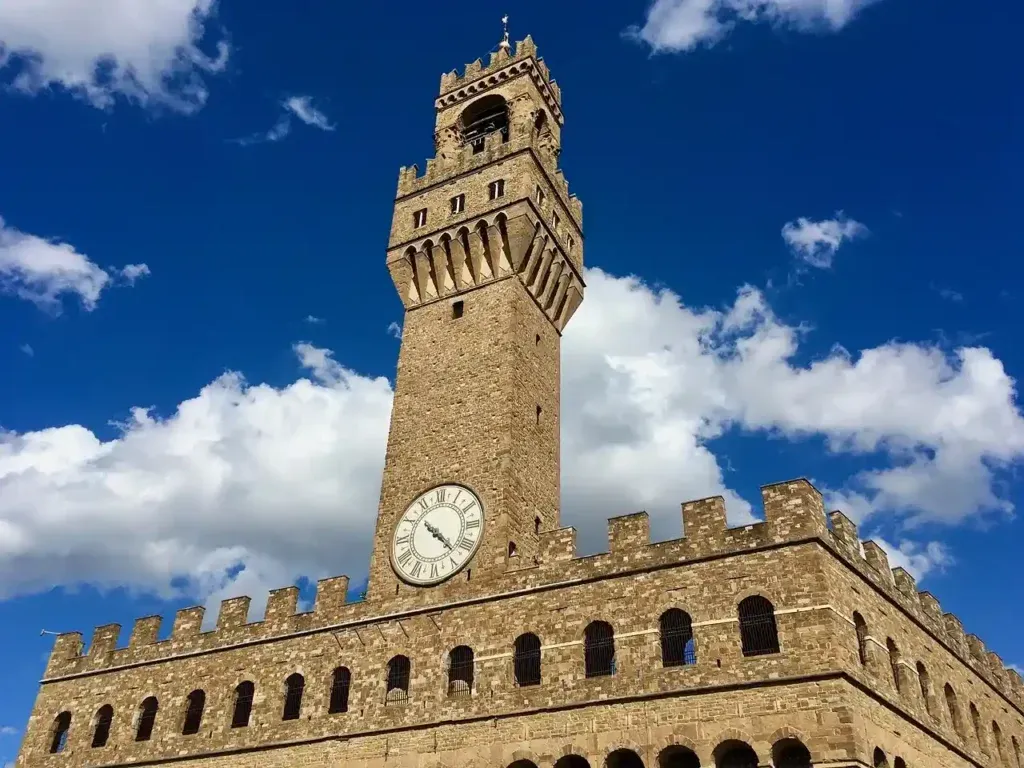
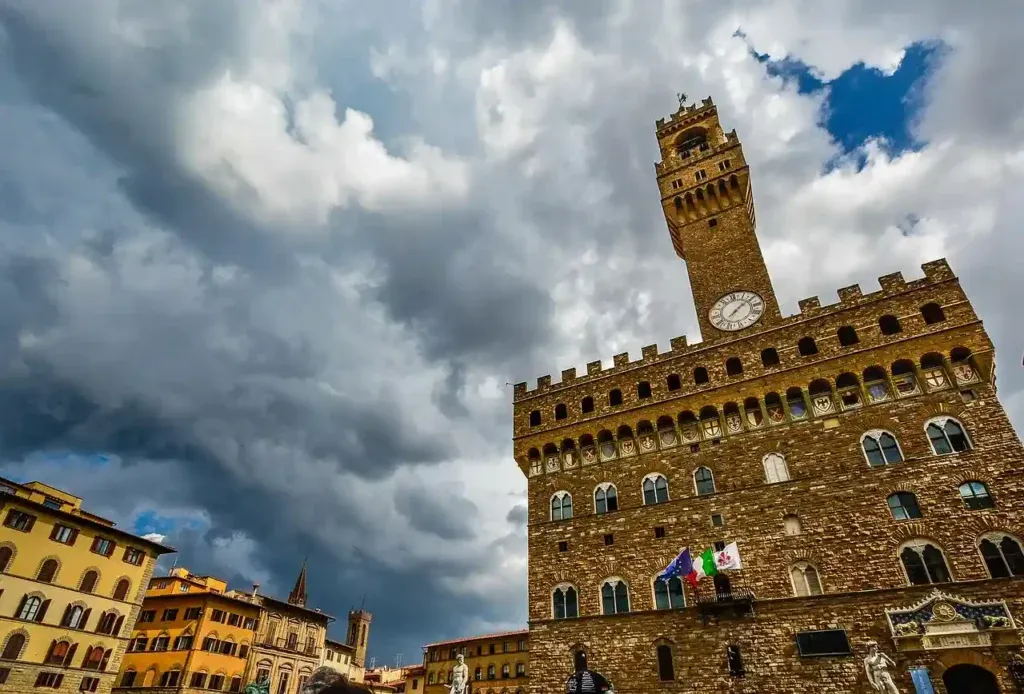
Arnolfo di Cambio designed the exterior in 1299 as a defensive fortress. Heavy rusticated stone blocks form the facade, giving the structure a solid appearance. Battlements supported by corbels line the upper walls, displaying painted coats of arms of the Florentine Republic. The 94-meter Arnolfo Tower sits asymmetrically above the square, creating a recognizable skyline feature with its seventeenth-century clock.
What are the two statues in front of Palazzo Vecchio?
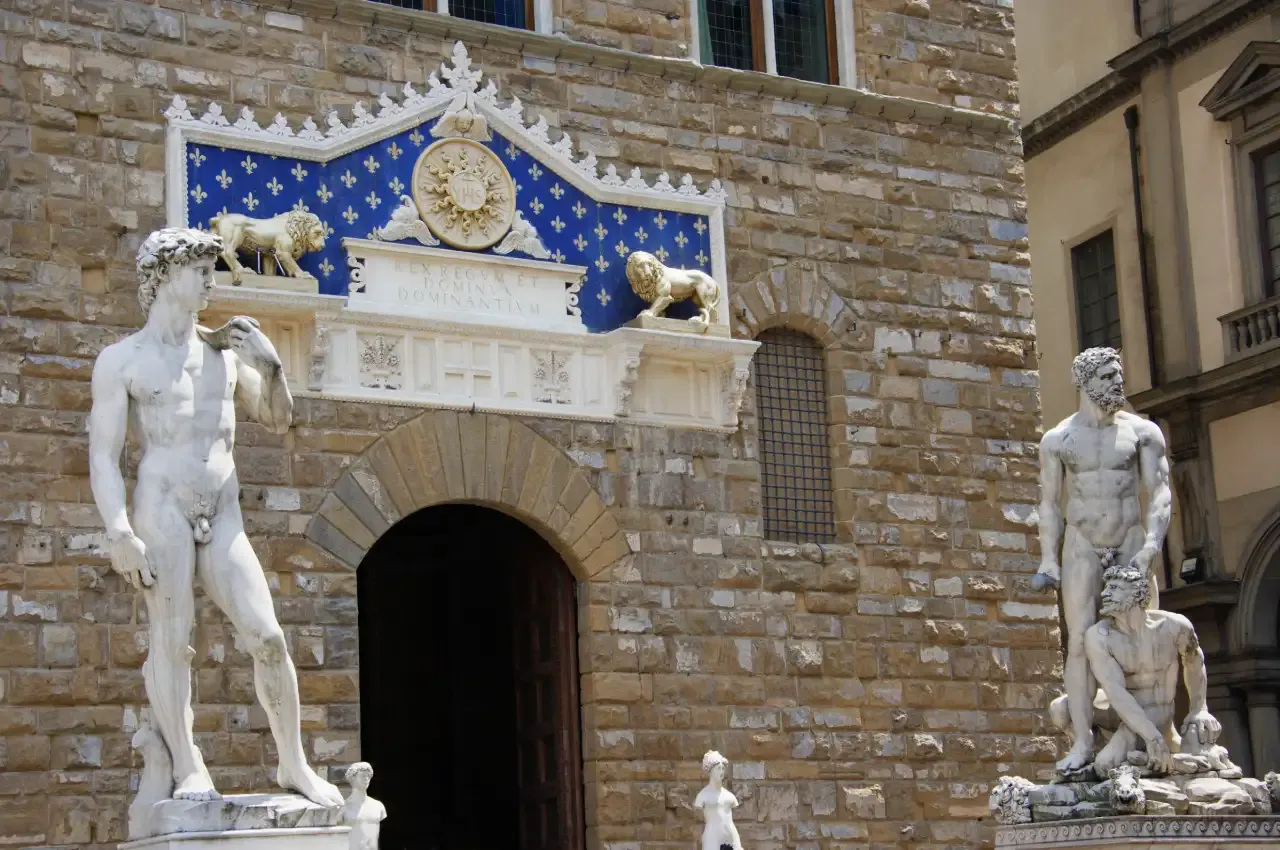
Two large statues flank the main entrance of the Palazzo Vecchio:
- On the left stands a replica of Michelangelo's David, which replaced the original statue in 1873 to protect it from weather damage. The David symbolizes the strength and defiance of the Florentine Republic.
- On the right stands Baccio Bandinelli's Hercules and Cacus, sculpted in 1534. This statue represents physical strength and the Medici family's return to power after their exile.
Is it worth going inside the Palazzo Vecchio?
Yes, visitors find value in entering the building. The museum holds significant Renaissance artworks, well-preserved historical chambers, and unique architectural features that tell the story of Florence's political history. Climbing the tower also provides a clear view of the city center, making it a practical addition to a Florence itinerary.
The Palazzo Vecchio Museum page sets out what museum entry covers and the seven works worth the most time.
Book your tickets to visit Palazzo Vecchio
FAQs about the interior of Palazzo Vecchio
More information about the Palazzo Vecchio
Opening hours
Travelers need to verify the daily schedule before arriving, as the Palazzo Vecchio opening hours change based on the season, the day of the week, and local civic events.
How to get there
When figuring out how to get to Palazzo Vecchio, visitors navigate to Piazza della Signoria, 50122 Firenze FI, which remains easily accessible by walking 10 minutes from the Santa Maria Novella train station or taking a nearby tram.