
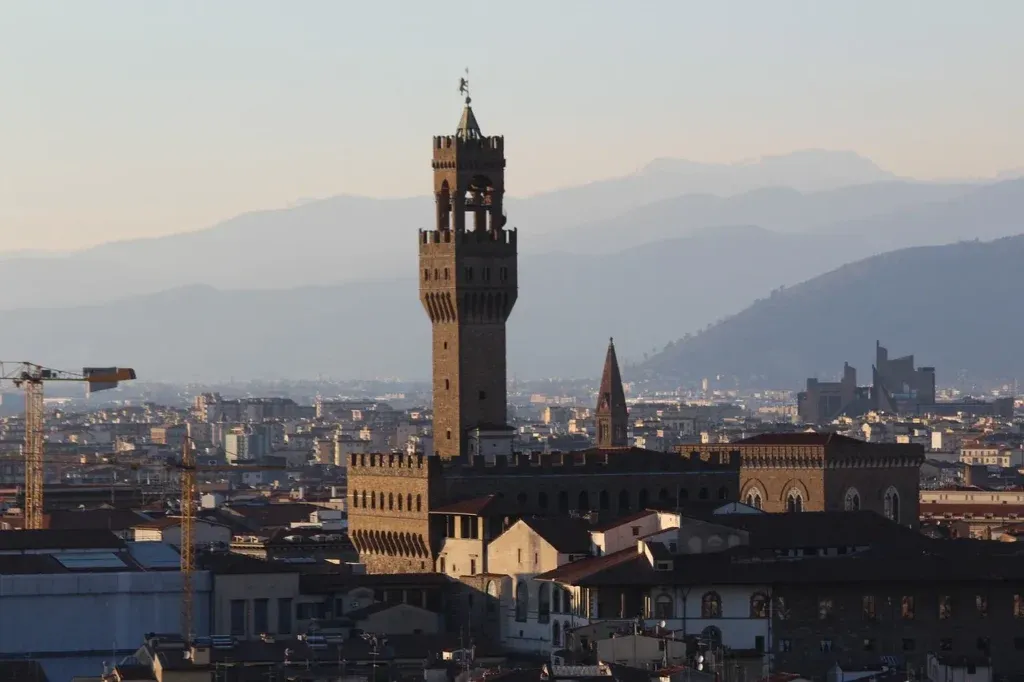
Palazzo Vecchio Museum, what the visit covers
The Museo di Palazzo Vecchio fills the working town hall of Florence with Medici apartments, Vasari's painted halls and sculpture by Michelangelo, Donatello and Verrocchio. This page sets out what museum entry covers, what sells separately and which works deserve the most time.
Palazzo Vecchio Museum tickets
What the Museo di Palazzo Vecchio is
The Museo di Palazzo Vecchio is a civic museum of the Comune di Firenze, set inside the building that has housed the city's government for more than seven centuries. The Priori and the Gonfaloniere di Giustizia ruled the Republic from these rooms. In 1540 Duke Cosimo I de' Medici moved his court in, and Giorgio Vasari later turned the old seat of power into a ducal residence.
That double life still shapes the visit. The city council meets in the Sala dei Duecento, its chamber again since 1872, and several rooms in the Quarters of Leo X hold the mayor's offices, so they open only on special occasions. The rest of the first and second floors, the Mezzanine and the battlements make up the museum route, and the Fondazione MUS.E runs its guided tours and family activities.
Because the palace is a working seat of government, council events close part or all of the route on some days. For October 2026 the Comune lists several dates when the Salone dei Cinquecento drops out of the visit, plus full-day closures on October 10 and October 26. A look at Palazzo Vecchio opening hours before booking avoids a wasted trip. Anyone who wants the room-by-room walk-through of the courtyards and quarters will find it on the page about what lies inside Palazzo Vecchio.
Entering the museum is not free
Adults pay to enter the museum rooms, and the Comune sells museum and tower admission as separate tickets. Entry to the museum is free up to age 17. The Comune also waives the fee for visitors with disabilities and their companions, licensed tourist guides, school groups with their teachers and ICOM members, among other listed categories.
The free first Sunday that many travelers read about does not apply here. The Ministry of Culture's Domenica al Museo covers state museums, and Palazzo Vecchio belongs to the city. The city's own scheme, the Domenica Metropolitana, opens the civic museums free of charge only to residents of the Città Metropolitana di Firenze, with the next dates set for November 1 and December 6, 2026.
The one section that needs no ticket is Tracce di Firenze, two ground-floor rooms of paintings, prints and drawings that trace how the city looked from the 15th century to the 20th. It keeps the same hours as the museum.
What the museum adds to a Florence visit
Plenty of travelers photograph the facade, the statues on the piazza and the entrance courtyard, then walk on without learning why the building matters. Upstairs, the museum shows Florentine power from the inside: the hall where the Republic's Great Council met before Cosimo I made it his audience chamber, the apartments where he and Eleonora di Toledo lived, and a council chamber the city still uses. Visitors walk from rooms where Florence is governed today into the private quarters of a 16th-century duke and duchess.
The art comes in one circuit. Works by Michelangelo, Donatello, Verrocchio, Bronzino and Vasari sit a few rooms apart, most of them in spaces the Medici built or chose for them. The palace also completes a day at the Uffizi. Vasari designed that building for Cosimo I from 1560 to gather the state's magistracies under one roof, hence the name, meaning offices. The portraits of famous men first painted for the Hall of Maps here later moved to the Uffizi corridors, where they still hang.
The museum suits travelers less if a picture gallery is the goal. Most of the painting here covers walls and ceilings in praise of the Medici, and anyone hunting for Botticelli or Giotto will get more from the Uffizi. Thursday visitors should also note the 2 pm closing, which leaves only a morning.
What museum entry includes and what is sold separately
A museum ticket covers the monumental quarters on the first and second floors. On the first floor that means the Salone dei Cinquecento with its view into the Studiolo and the Quarters of Leo X where open. Upstairs come the Quarters of the Elements, Eleonora's apartments, the Priori rooms with the Sala dei Gigli and the Hall of Maps, with the Mezzanine in between when it is open. Three things sit outside the museum ticket.
- The Arnolfo Tower and battlements. The 95-meter tower needs its own ticket. A stone staircase of 223 steps climbs to the lookout, which opens from 9 am to 5 pm (to 2 pm on Thursdays). Rain shuts the tower, and then only the battlements walk stays open. The Comune admits no children under 6 and asks that an adult accompany anyone under 18.
- The Roman theater excavations. The Comune lists guided visits on Saturdays and Sundays at 12:00 and 12:45 for up to 15 people, on a separate ticket. Its museum page currently marks the archaeological route as temporarily closed, so travelers should confirm before planning around it.
- MUS.E tours and activities. Guided tours, the Secret Passages route (10 people at a time) and family workshops carry their own fee on top of museum entry.
None of the Palazzo Vecchio tickets sold on this site includes the Arnolfo Tower. A climb needs a separate tower ticket.
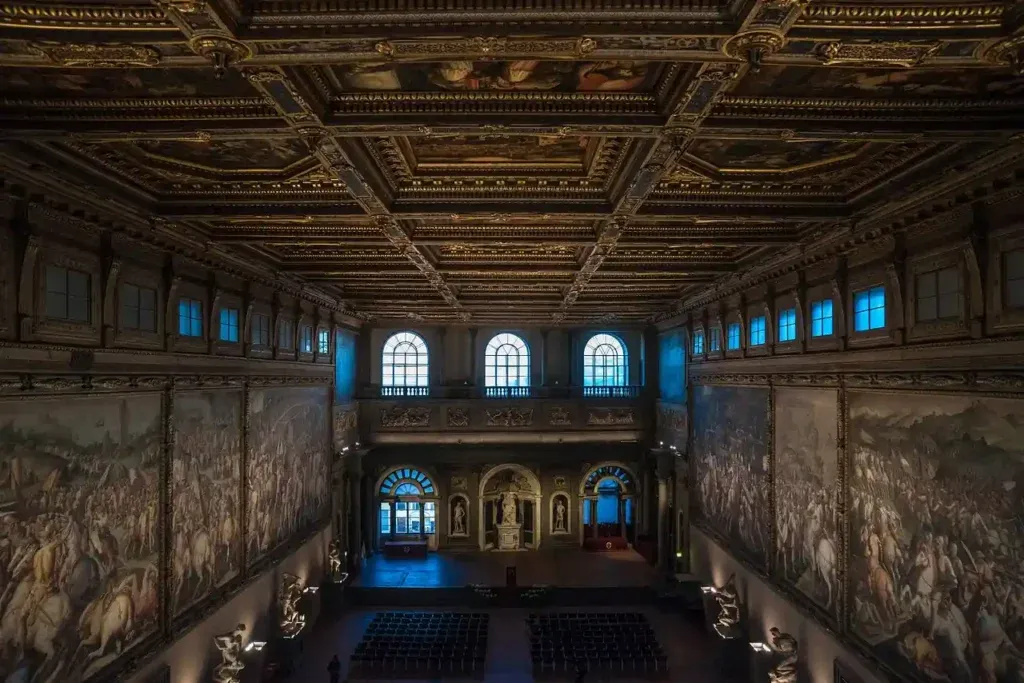
1. Vasari's battle frescoes and Leonardo's lost Battle of Anghiari
The Salone dei Cinquecento looks the way Giorgio Vasari and his workshop left it. They painted the ceiling first and finished it for the 1565 wedding of Francesco I and Joanna of Austria, with Cosimo I crowned by Florence in the central panel. Between 1567 and 1571 they covered the long walls with the wars against Pisa and Siena, set face to face so that Cosimo's 14-month campaign against Siena would outshine the Republic's 14-year struggle with Pisa.
Before Vasari, the Republic had asked Leonardo da Vinci to paint the Battle of Anghiari in this hall and Michelangelo the Battle of Cascina, and neither finished. In 2011 and 2012 a team led by Maurizio Seracini drilled small holes in Vasari's Battle of Marciano, where a soldier's green banner reads "Cerca trova", looking for Leonardo's paint on an older wall behind it. The search stopped in 2012 with nothing confirmed.
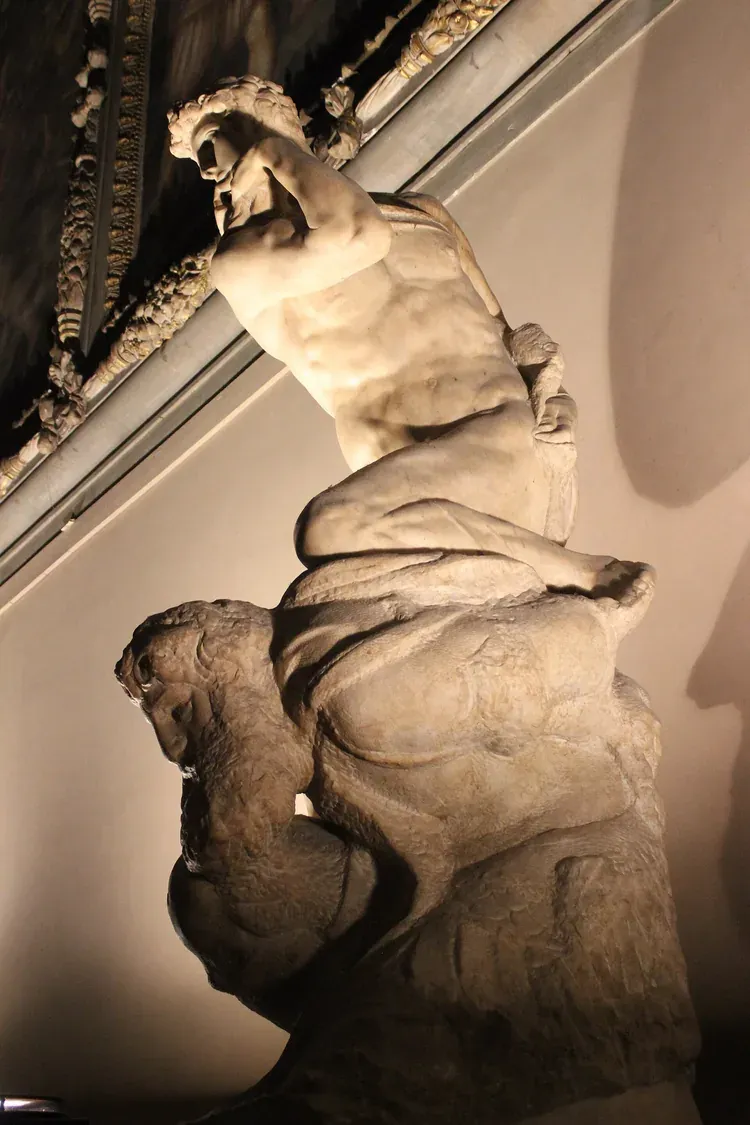
2. Michelangelo's Genius of Victory
Michelangelo carved this marble group for the tomb of Pope Julius II and left it unfinished in his studio when he died in 1564. Vasari brought it into the Salone. It stands midway along the wall opposite Giambologna's clay model of Florence triumphant over Pisa, the two groups facing each other across the hall. In a room built to celebrate Medici victories, the group took on a new meaning as Florence subduing a rival city. The statue spent decades at the Bargello from 1868 and returned to the hall in 1921. On days when council events close the Salone, it drops out of the visit with the frescoes.
Photo: "Genio Victoria" by Miguel Hermoso Cuesta (CC BY-SA 4.0).
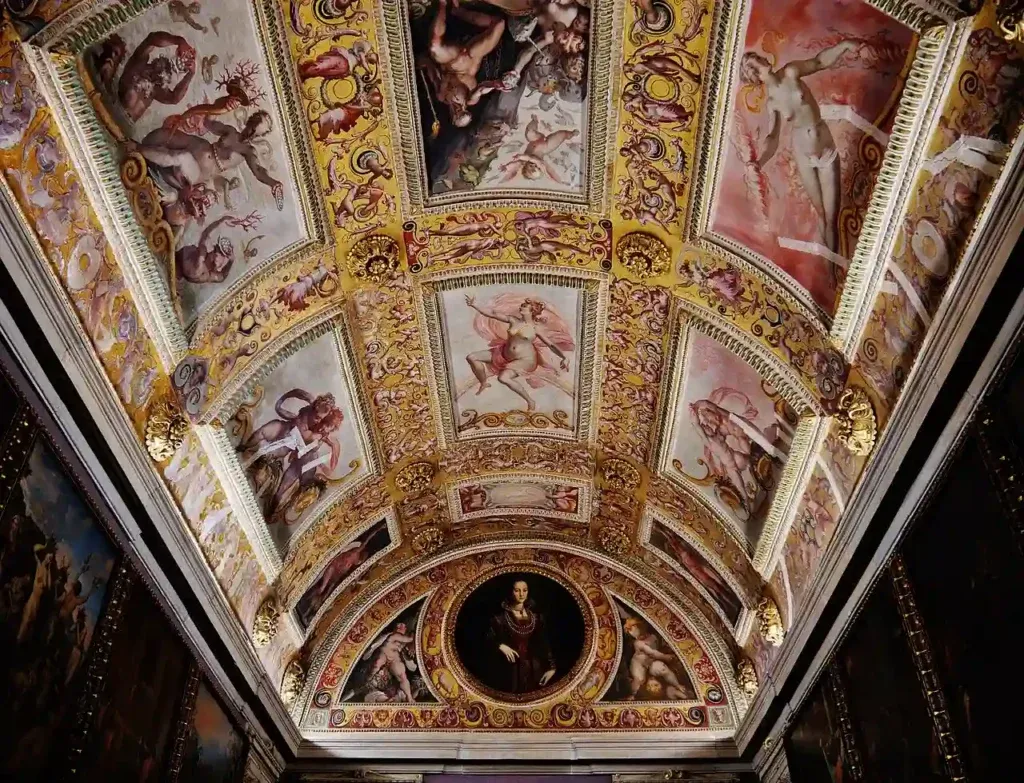
3. The Studiolo of Francesco I
Francesco I de' Medici commissioned this small private room between 1570 and 1575, on a plan by Vasari and the scholar Vincenzo Borghini, to keep the rarest small objects of the family collection. The oval paintings on the lower walls are the doors of cabinets set into the masonry. Each wall belongs to one of the four elements, so pearls went behind the Water panels and worked glass and metal behind Fire. Thirty-one artists of the Accademia del Disegno, Alessandro Allori, Ammannati and Giambologna among them, competed on the decoration. Visitors look in through an opening near the south end of the Salone, and access tightens further during heat alerts.
4. Verrocchio's Putto with a Dolphin
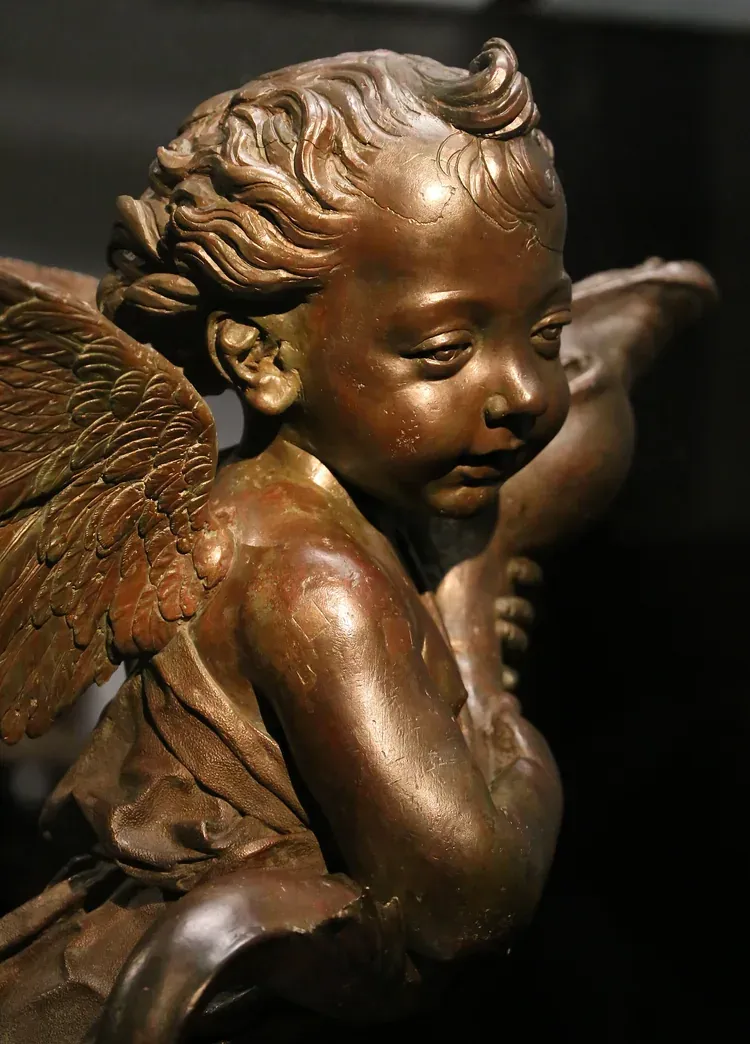
Andrea del Verrocchio, in whose workshop Leonardo trained, cast this bronze putto holding a dolphin around 1470-1480 for a fountain at Lorenzo de' Medici's villa at Careggi. Cosimo I moved it in 1557 to the porphyry fountain in the Michelozzo courtyard, and in 1959 the city took it indoors to protect it, setting a copy by the bronze caster Bruno Bearzi in its place. Anyone who crossed the courtyard on the way in has seen the copy. The original, restored in 2019 with funding from Friends of Florence, now stands upstairs in the Quarters of the Elements, in the room dedicated to Juno.
Photo: "Andrea del Verrocchio, putto con delfino" by Sailko (CC BY 3.0).
5. Bronzino's chapel for Eleonora di Toledo
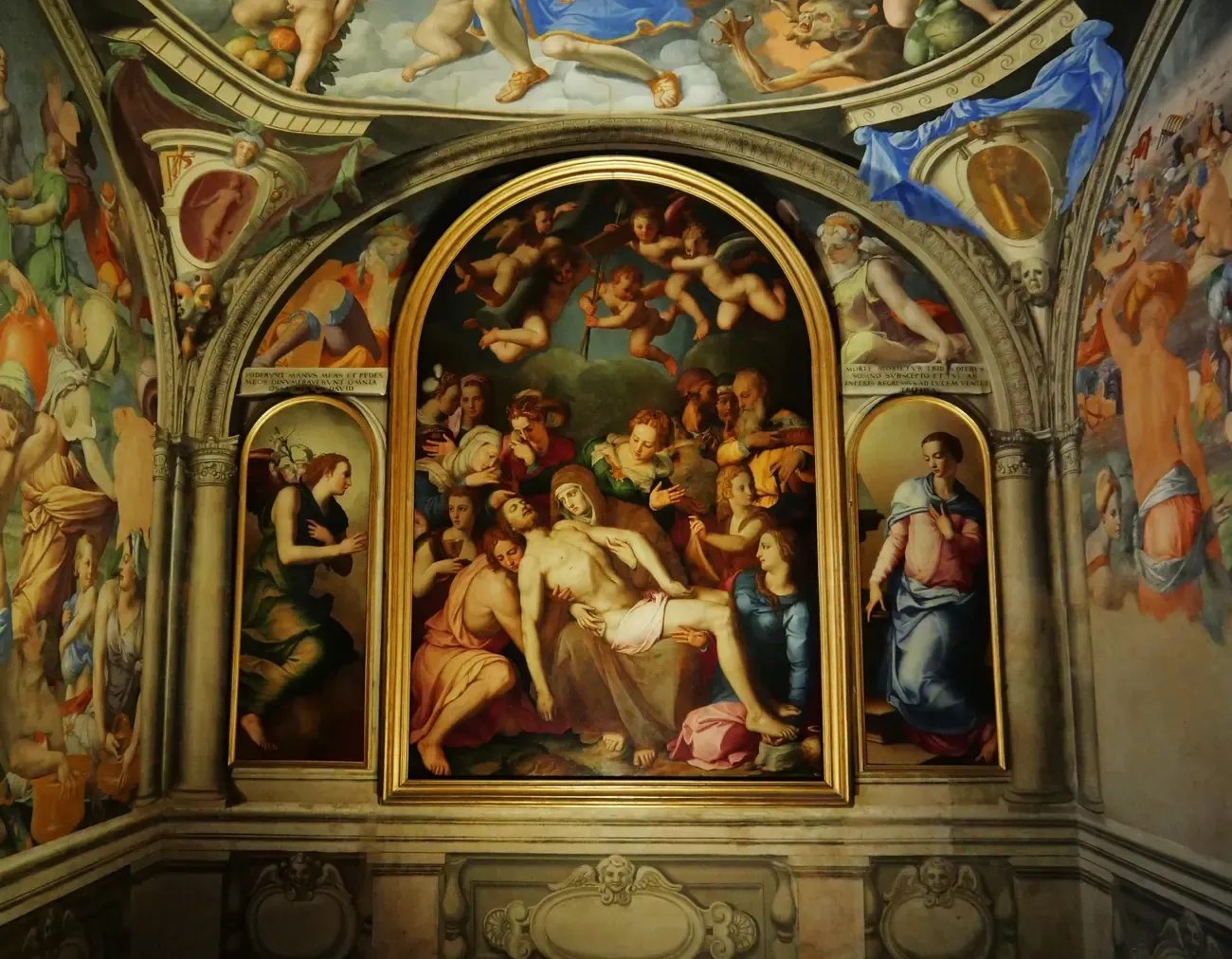
Agnolo Bronzino painted the private chapel of Duchess Eleonora di Toledo in stages between 1540 and 1565, and the Comune counts it among the masterpieces of Florentine Mannerism. Stories of Moses fill three walls, the vault evokes the Apocalypse and a Deposition stands over the altar, the whole cycle built around the Eucharist and the glory of the Medici line. The chapel opens off Eleonora's apartments on the second floor, where Vasari later raised the ceilings and painted them with heroines of antiquity in her honor.
6. Donatello's Judith and Holofernes
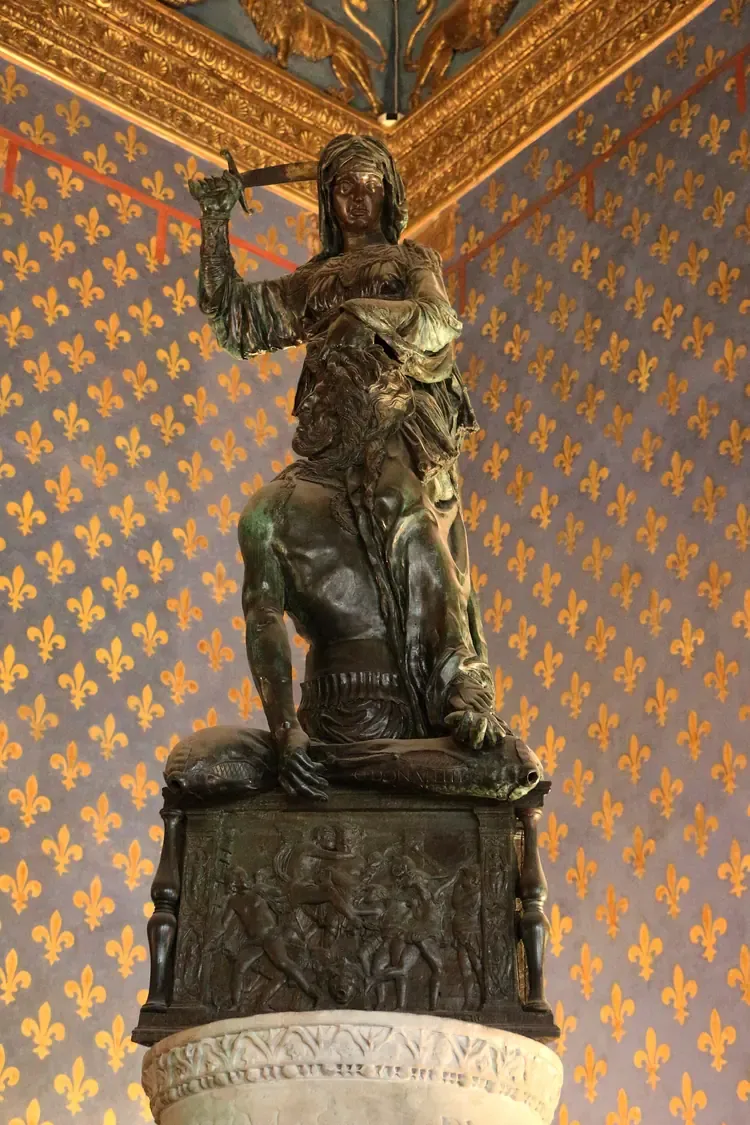
Donatello cast this bronze of Judith beheading Holofernes between about 1457 and 1464. In 1495, after the Medici were driven out, the Republic set it on the piazza beside the palace door as a warning against tyranny, and a copy still marks that spot. The original stands in the Sala dei Gigli, under a gilded wooden ceiling by Giuliano da Maiano and walls frescoed by Francesco Salviati, and it returned there in June 2024 after a restoration of about ten months. Before leaving the room, visitors should look at the inlaid door with portraits of Dante and Petrarch, made from a design by Sandro Botticelli.
Photo: "Donatello, Giuditta che decapita Oloferne" by Sailko (CC BY 3.0).
7. The Hall of Maps and Danti's globe
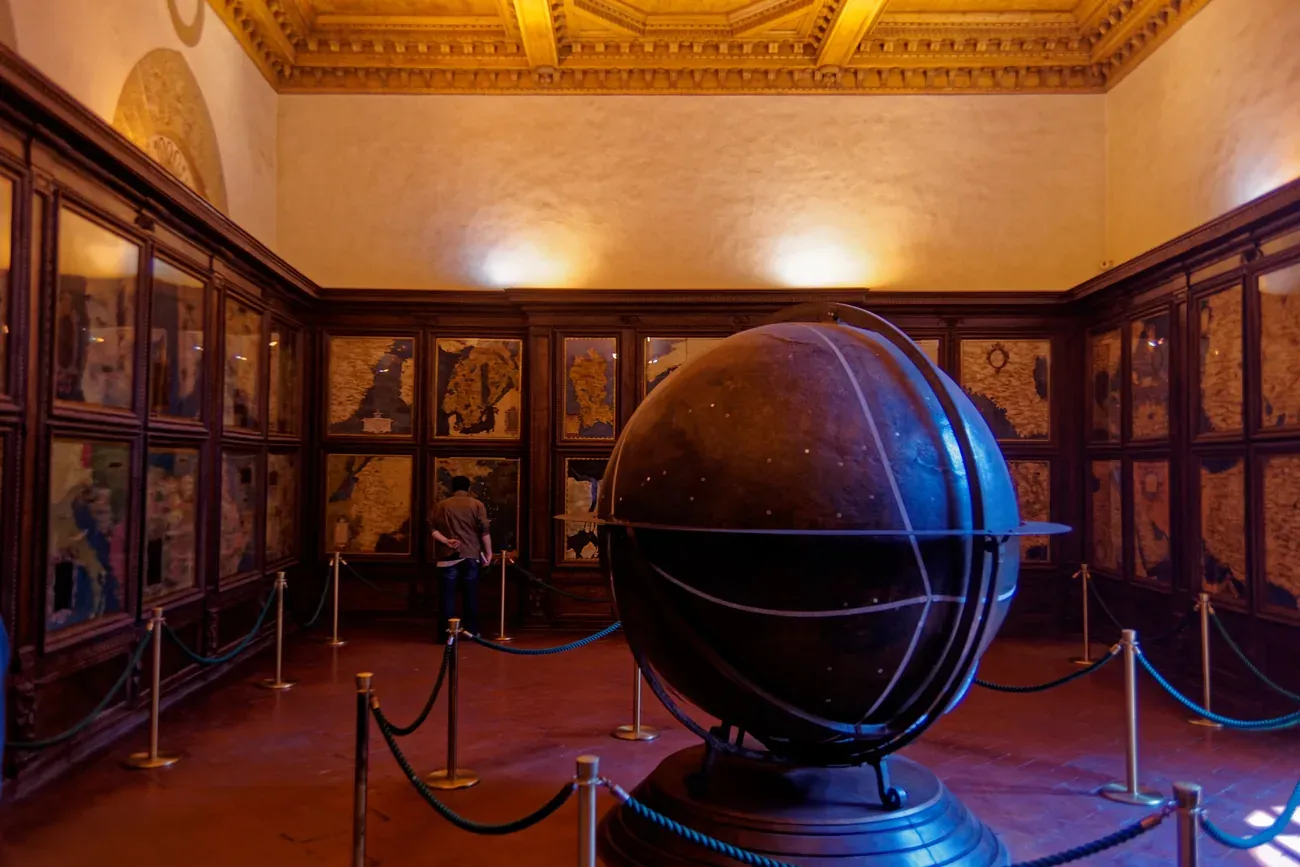
Vasari built this room between 1561 and 1565 for Cosimo I as both the main wardrobe of the court and a hall of cosmography. Walnut cabinets by Dionigi Nigetti line the walls, and their doors carry 53 painted maps, 30 by the Dominican friar Egnazio Danti and 23 by the monk Stefano Bonsignori, including early views of the Americas. Danti also built the large terrestrial globe in the middle of the room, which stood elsewhere for centuries and came back only in the 20th century. The plan was grander still, with a celestial globe meant to hang from the ceiling while the earthly one descended to the floor.
Photo: "Sala delle Mappe Geografiche" by Txllxt TxllxT (CC BY-SA 4.0).
How to plan the route through the museum
Visitors enter from Piazza della Signoria or from Via dei Gondi and pass through the Cortile della Dogana, home to the ticket office. Umbrellas, backpacks and large bags must go to the free cloakroom there. The route works upward, starting with the Salone dei Cinquecento, the Studiolo and the Quarters of Leo X on the first floor. The Mezzanine holds the Loeser collection of period furniture and paintings, and the second floor brings the Quarters of the Elements, Eleonora's apartments, the Sala dei Gigli and the Hall of Maps. Tower ticket holders continue from there to the battlements.
Allow about 90 minutes to two hours for the museum rooms at a steady pace, and longer with the tower. The museum opens from 9 am to 7 pm, closing at 2 pm on Thursdays, and the ticket office stops selling an hour before closing. During a level 3 heat alert, MUS.E closes the Mezzanine and the terrace of Saturn, limits the Studiolo and stops tower visits at the battlements.
For visitors with reduced mobility, the side entrance on Via dei Gondi is the one to use, and taxis may drop off at that door. A lift reaches the Salone dei Cinquecento and the upper rooms (its door is 75 cm wide), and the cloakroom lends two wheelchairs free of charge. The Mezzanine, the battlements, the tower and some education rooms remain out of reach.
The museum with children
Under-18s enter the museum free, and MUS.E runs permanent family activities in the palace, booked ahead and paid on top of entry. The program includes the Story of the Turtle and the Sail, a workshop on fresco painting, a tour called Guided by Giorgio Vasari, Life at Court and the Secret Passages route. Bookings sort children into age bands of 4 to 7, 8 to 12 and over 12. The tower suits older children only, since the Comune bars under-6s and requires an adult with anyone under 18.