
What to see at Pitti Palace?
The Pitti Palace stands as the largest museum complex in Florence, housing centuries of royal art and historical artifacts. Knowing what to see in Pitti Palace helps travelers navigate its vast rooms, which span Renaissance painting galleries, state apartments, and modern art collections.
What is inside the Pitti Palace?
When considering Palazzo Pitti what to see, visitors encounter several distinct museum collections housed across multiple floors. The Pitti Palace highlights encompass grand reception halls, private royal quarters, and specialized art galleries:
Main Courtyard
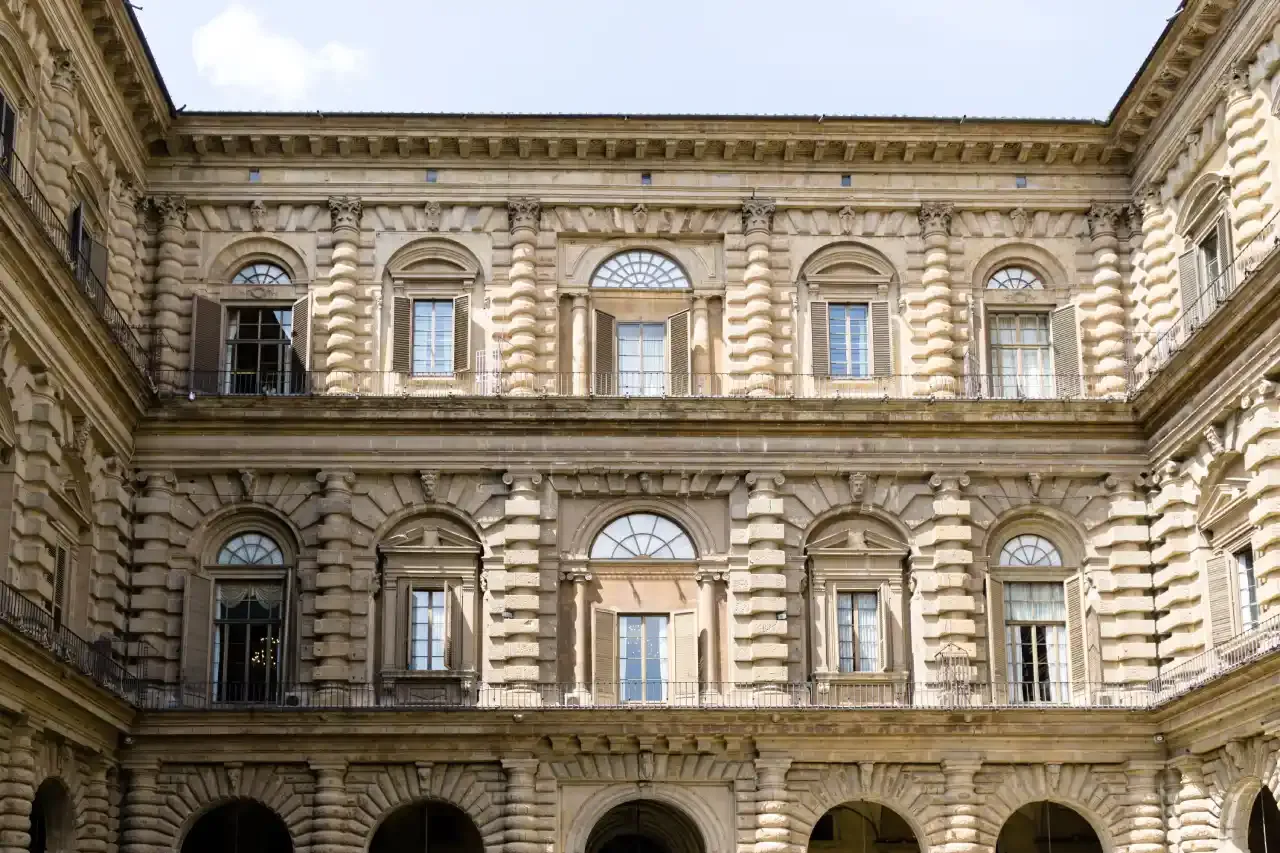
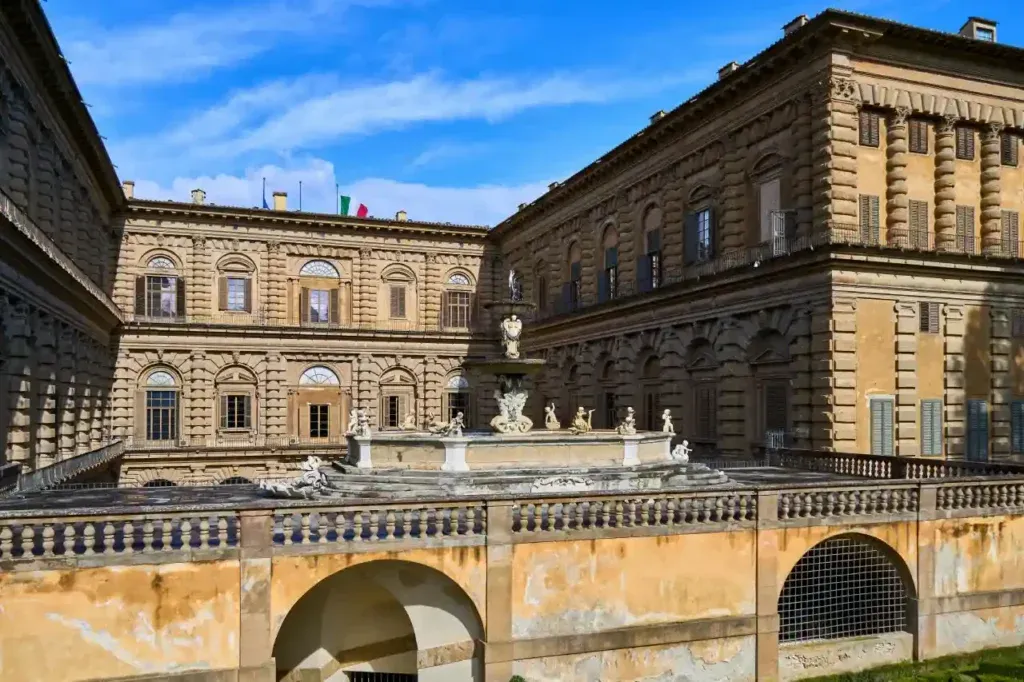
Designed by Bartolomeo Ammannati, the Main Courtyard serves as the central architectural transition within the Pitti Palace. The three-sided courtyard features heavy rusticated stone columns across three floors, creating a textured visual connection with the main façade. The open fourth side faces directly toward the rising Boboli hillside, linking the enclosed palace halls with the exterior landscape.
The court historically hosted courtly receptions, theatrical plays, and water pageants organized by the Medici grand dukes. At the far end of the terrace overlooking the courtyard sits the Fountain of the Artichoke, framed by stone balustrades. This monumental space remains a key example of Renaissance courtyard architecture in Florence.
Palatine Gallery and Planet Rooms
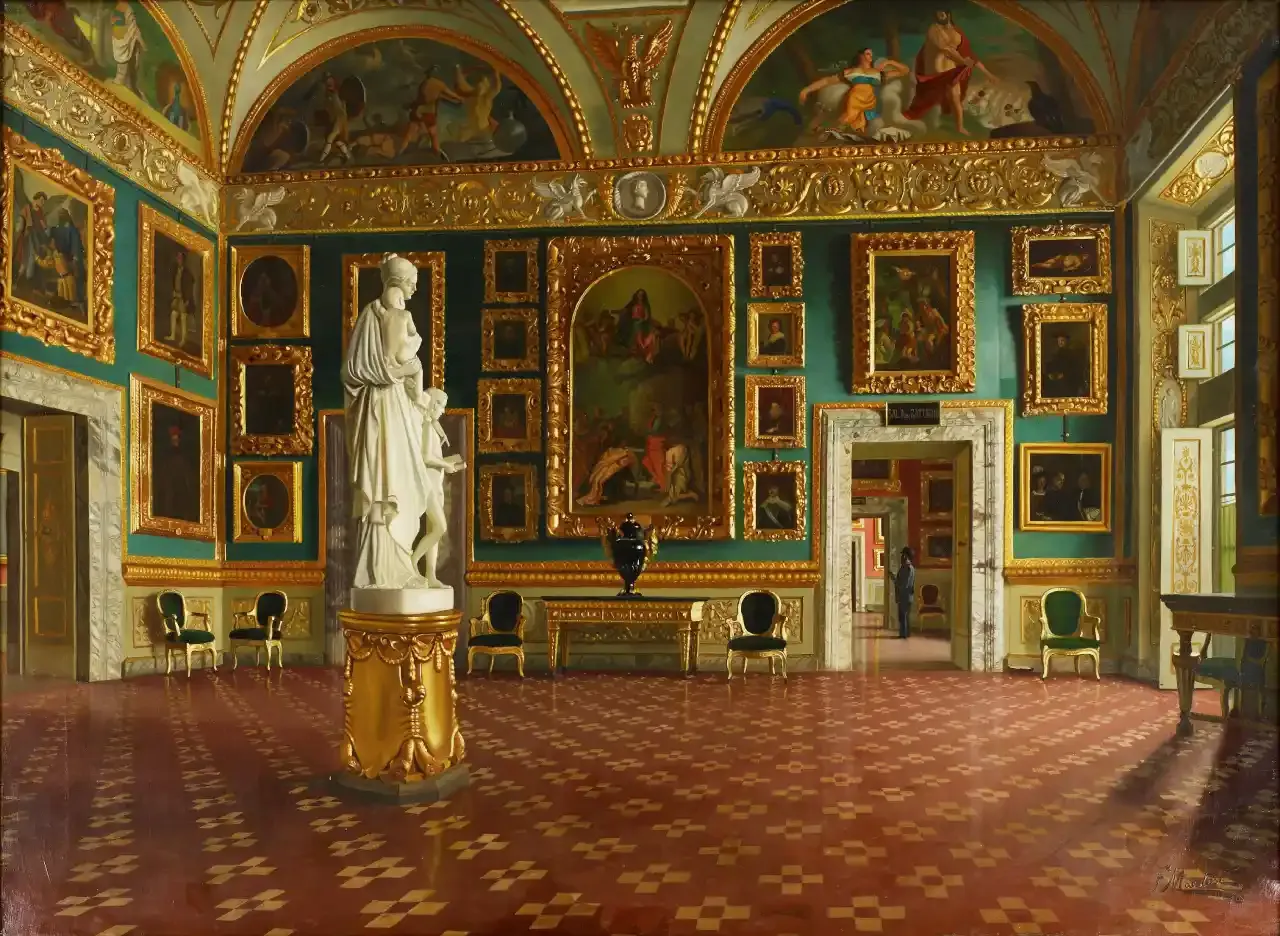
The Palatine Gallery holds the primary painting collection inside the palace, arranged across the historic Planet Rooms decorated by Pietro da Cortona. These spaces include the Hall of Venus, Hall of Mars, Hall of Jupiter, Hall of Saturn, and Hall of the Iliad. High ceilings feature frescoed allegories depicting the Medici dynasty alongside mythological motifs.
Heavy gilded frames display paintings by Raphael, Titian, Rubens, and Correggio mounted in dense arrangements on silk-covered walls. Notable masterworks in these halls include Raphael's Madonna della Seggiola and Titian's Portrait of Pietro Aretino. The grand decorative layout preserves the original private gallery arrangement preferred by the Medici grand dukes during the 17th century.
Renaissance and Mannerist Halls
Beyond the Planet Rooms, additional exhibition spaces display Renaissance and Baroque artworks within specialized themed halls:
- The Hall of Prometheus features early Florentine Renaissance paintings, including round panel works by Filippo Lippi and Sandro Botticelli.
- The Hall of Ulysses presents neoclassical ceiling frescoes portraying the return of Ulysses to Ithaca, accompanied by Renaissance portraits and devotional paintings.
- Nearby, the Hall of Psyche and the Poccetti Gallery house late Mannerist frescoes, allegorical ceiling panels, and small-scale easel paintings.
Royal and Imperial Apartments
The Royal and Imperial Apartments occupy 14 state rooms once inhabited by the Medici, Lorraine, and Savoy dynasties. The White Room, also known as the White Hall, features white stucco wall decorations designed by Gaspare Paoletti, functioning as a ballroom for royal receptions. The Music Room displays mahogany furniture, crystal chandeliers, and a neo-Empire piano used during official court gatherings. In the Room of the Education of Jupiter, visitors view ceiling frescoes depicting mythological instruction alongside fine tapestries and gilt-bronze fixtures.
These preserved living spaces contain original furnishings, silk wall coverings, portraits, and decorative porcelain objects representing four centuries of Italian royal residence.
Gallery of Modern Art
Located on the top floor of the palace, the Gallery of Modern Art houses Italian paintings and sculptures spanning from the Neoclassical period through the early 20th century. Key exhibition spaces include the Macchiaioli Room, displaying landscape paintings by Tuscan impressionist artists such as Giovanni Fattori and Silvestro Lega, and the Risorgimento and Battle Paintings Gallery features large-scale historical canvasses depicting military scenes from Italian unification wars.
Additional rooms display neoclassical marble sculptures, including the statue of Victor Hugo carved by Augusto Rivalta. The gallery collection documents artistic developments in Tuscany following the fall of the Medici dynasty through the national unification of Italy.
Museum of Costume and Fashion
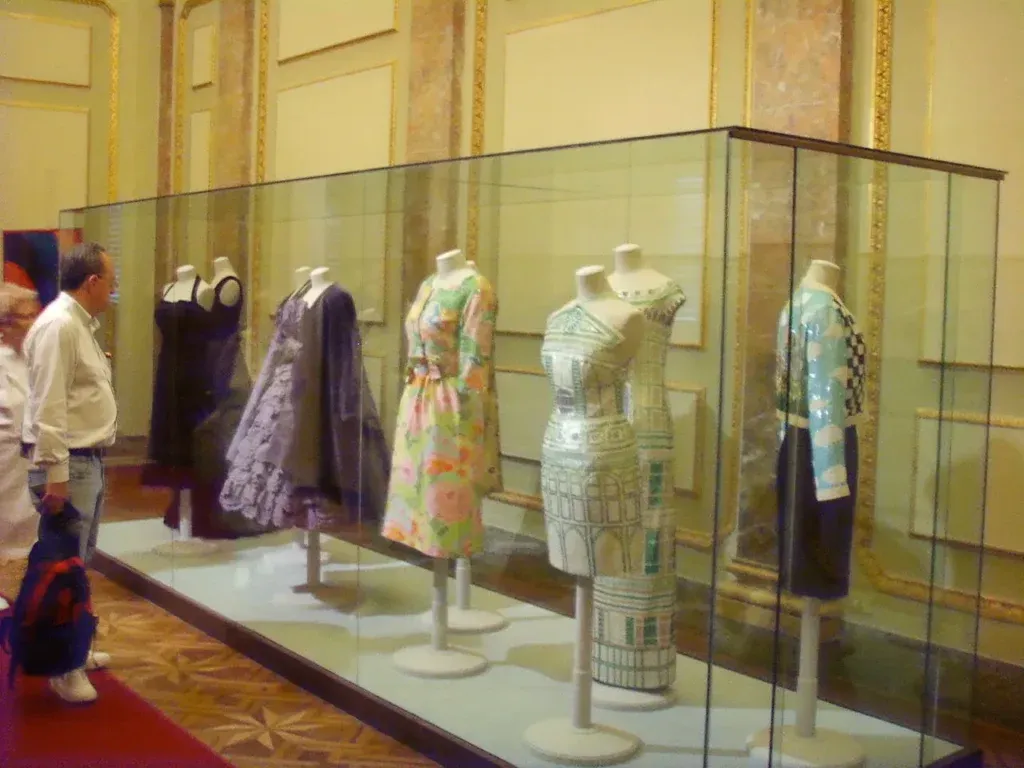
Located within the Palazzina della Meridiana in the south wing of the palace, the Museum of Costume and Fashion showcases historical clothing, accessories, and theatrical costumes from the 16th century to the present day. As Italy's primary state museum dedicated to fashion history, the collection contains over 6,000 items, including preserved court gowns, historic uniforms, and modern couture creations.
Key exhibits feature restored 16th-century funerary garments worn by Grand Duke Cosimo I de' Medici and Eleonora of Toledo. Rotating displays present 20th-century garments designed by prominent fashion houses, including Giorgio Armani, Gianni Versace, and Valentino, illustrating the evolution of European dress and Italian craftsmanship.
Photo: “Galleria del Costume, Firenze” by Sailko.
Boboli Gardens
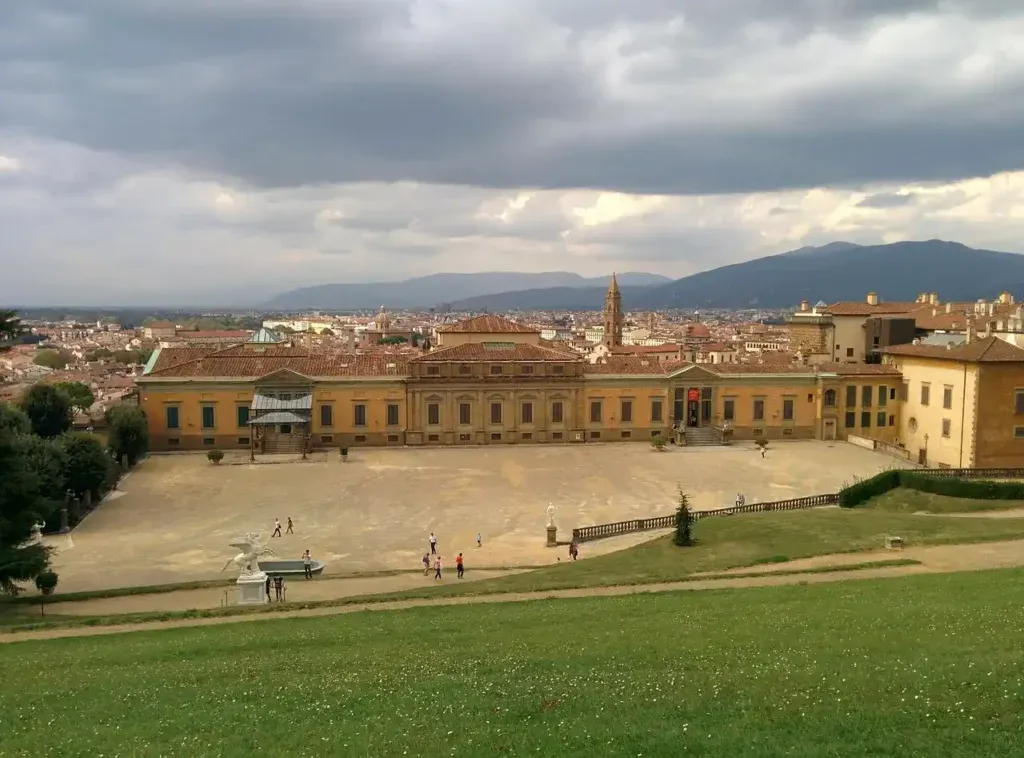
Directly behind the palace, the Boboli Gardens form an outdoor museum spanning 45 hectares on the hillside. The central axis begins with the Boboli Gardens Amphitheatre, which opens upward into the terraced landscape. Built around an ancient Egyptian obelisk and an enormous Roman granite basin, the stone amphitheatre served as a historical venue for Medici theatrical performances, horse carousels, and court celebrations.
Beyond the amphitheatre, manicured gravel pathways lead to decorative fountains, grottoes, ancient Roman statues, and open lawns. The upper grounds include the Neptune Fountain and the Knight's Garden, offering broad panoramic views over Florence alongside historic Italian landscape design.
Architecture of the Pitti Palace
Understanding Pitti Palace what to see requires examining both the interior decorative programs and the massive exterior stonework. The architectural layout reflects centuries of expansions directed by leading Italian architects:
Interior architecture
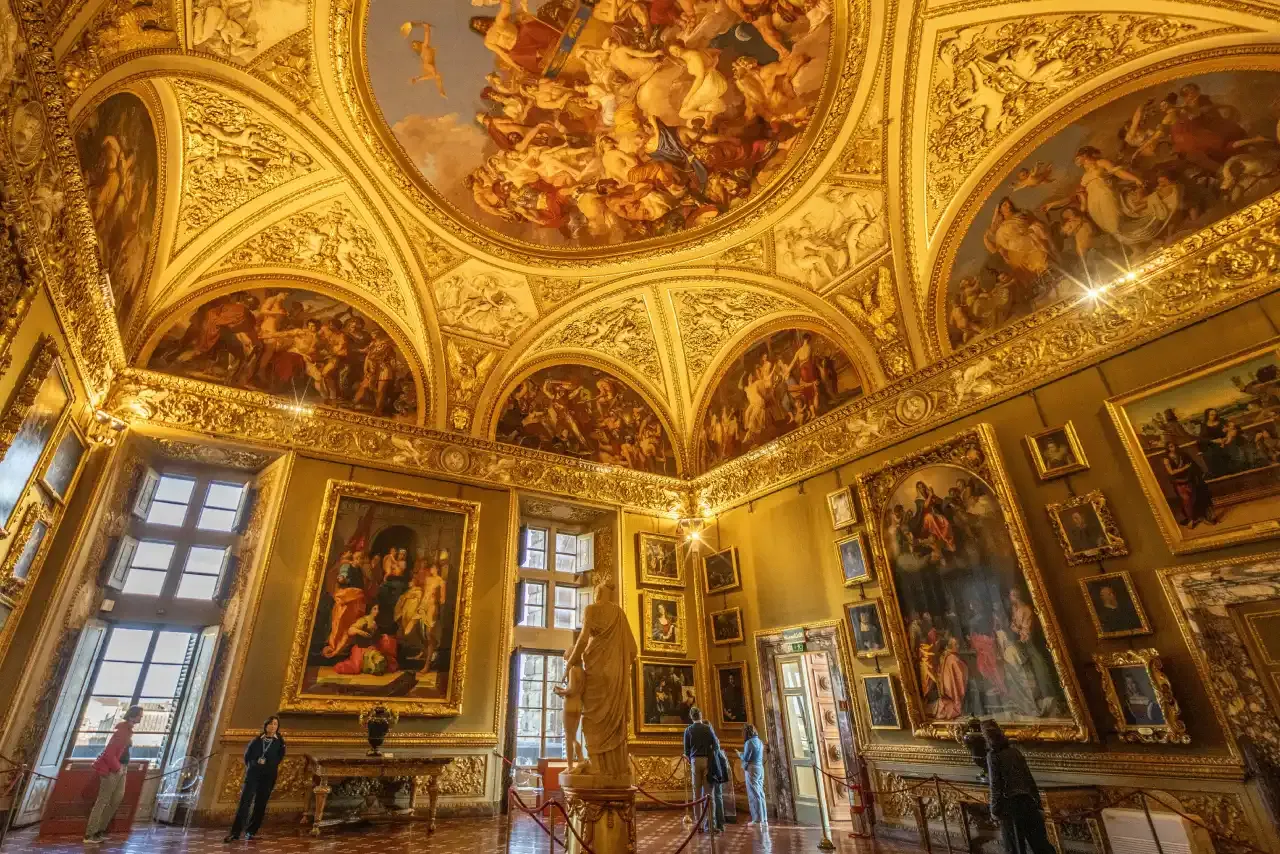
The interior architecture of the Pitti Palace reflects successive expansions by Florentine grand dukes, characterized by monumental vaulted ceilings and gilded stucco decorations. Designed primarily during the 16th and 17th centuries, the state rooms feature vast barrel vaults painted with elaborate Baroque illusionistic frescoes.
Bartolomeo Ammannati designed the central courtyard and grand staircase, incorporating heavy rustication into internal stone pillars. Wooden parquet floors, marble doorframes, and silk-paneled walls define the room divisions. High arched windows framed in carved stone allow natural light to illuminate decorative ceiling moldings, creating an opulent spatial progression through the grand reception halls and royal living quarters.
Is it worth going inside Pitti Palace?
Yes, visiting the interior of the Pitti Palace provides access to one of Europe's premier royal art collections preserved in its original historical setting. Unlike standard museums where paintings hang in modern galleries, the Palatine Gallery retains its private 17th-century ducal arrangement, offering visitors a direct look at how Renaissance and Baroque art hung in royal residences. The inclusion of the Royal Apartments, the Gallery of Modern Art, and direct access to the Boboli Gardens makes the palace an essential landmark for art and history enthusiasts in Florence.
Those weighing it against the Medici's earlier seat across the river will find Palazzo Vecchio or Pitti Palace compared side by side.
Book your tickets to visit the Pitti Palace
Visitors can secure advance admission to explore the Palatine Gallery, Royal Apartments, and surrounding museum spaces. Booking tickets in advance guarantees reserved entrance times and streamlines access to the palace complex:
FAQs about what to see in Pitti Palace
More information about the Pitti Palace
Opening hours
Visitors must check the Pitti Palace & Boboli Gardens opening hours before traveling to the estate. The administration changes the schedule depending on the season and public holidays.
How to get there
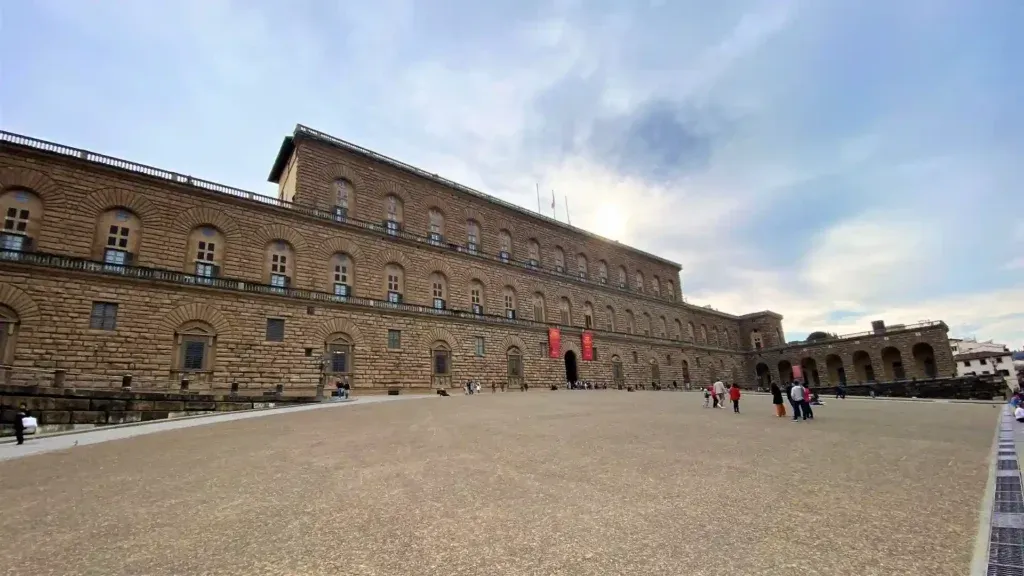
Travelers researching how to get to Palazzo Pitti find the destination easy to reach from the city center. The building occupies the official address at Piazza de' Pitti, 1, 50125 Firenze FI, Italy.
Plan your visit
To successfully plan your visit to Pitti Palace, tourists must purchase tickets prior to arrival. The property contains five museums and the adjoining outdoor grounds.