Palazzo Vecchio or Pitti Palace, which one to visit
Palazzo Vecchio and Pitti Palace were Medici homes, less than a kilometer apart across the Arno. One tells the story of Florentine government and Renaissance power; the other holds painting galleries, court apartments and gardens. The better pick depends on the traveler and the weekday.
The short answer for each type of traveler
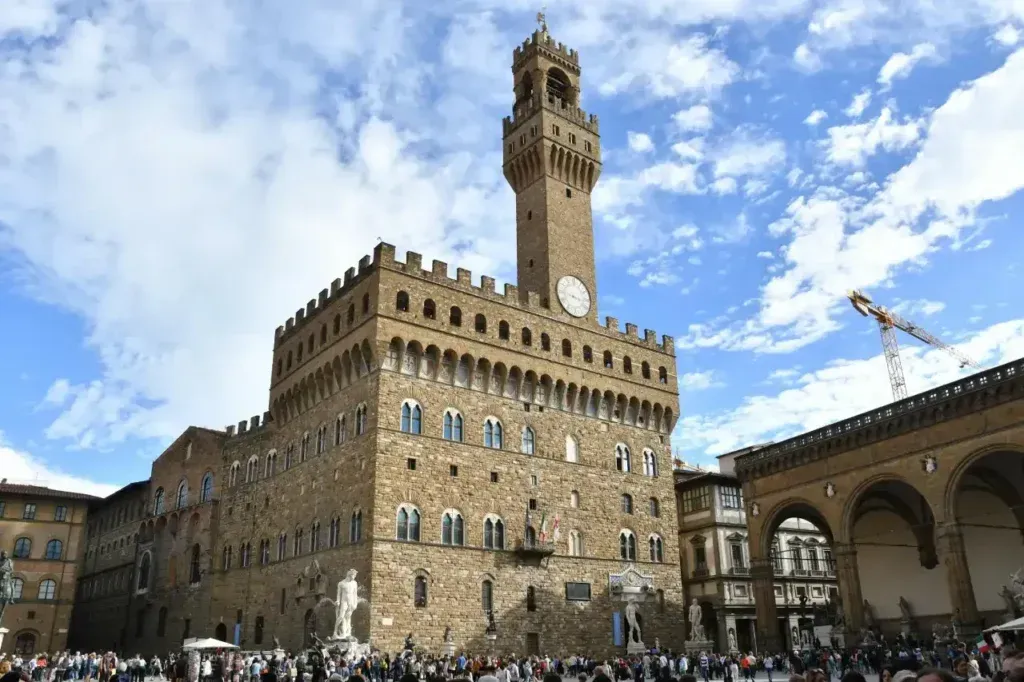
- Political history and the Renaissance: Palazzo Vecchio. Florence has governed itself from this building for more than seven centuries, and Cosimo I de' Medici moved his court into it in 1540. Its council hall and private rooms show a republican town hall turning into a ducal residence.
- Painting and court life: Pitti Palace. The Palatine Gallery hangs about 500 Medici paintings in the old state rooms, with more works by Raphael than any other museum, and the Royal Apartments show how three dynasties lived.
- Gardens: Pitti Palace. Boboli Gardens climb the hill behind the palace, on a separate ticket or a combined Pitti and Boboli one.
- Short on time: Palazzo Vecchio. The museum route covers one building in about two hours, while Pitti spreads over three floors of museums and a hillside garden.
- Traveling with children: either, for different reasons. Both admit under-18s free, although Palazzo Vecchio still asks them to book a time slot. Children from age 6 can climb the Palazzo Vecchio tower with an adult, and Fondazione MUS.E runs bookable family tours inside the palace. At Pitti, Boboli gives younger children grottoes, fountains and open lawns.
- A Monday in Florence: Palazzo Vecchio. It opens every day of the week. Pitti Palace closes on Mondays, and Boboli closes on the first and last Monday of each month.
- A Thursday afternoon: Pitti Palace. Palazzo Vecchio and its tower close at 14:00 on Thursdays, while Pitti stays open until 18:30.
Palazzo Vecchio vs Pitti Palace side by side
| Palazzo Vecchio | Pitti Palace | |
|---|---|---|
| What it is | Florence's seat of government since 1299 and Medici residence from 1540, now a civic museum of the Comune di Firenze that still houses the town hall | A banker's palace begun by Luca Pitti in the mid-1400s, bought by the Medici in the mid-16th century and later home to the Habsburg-Lorraine and Savoy courts; a state museum of the Uffizi Galleries |
| What visitors see | Salone dei Cinquecento, the Medici apartments, the Studiolo of Francesco I, Donatello's Judith and Holofernes, Michelangelo's Genius of Victory | Palatine Gallery, Royal Apartments, Gallery of Modern Art, Museum of Costume and Fashion, Boboli Gardens behind the palace |
| Realistic time | About 2 hours for the museum, plus up to an hour for the tower | 3 to 4 hours for the palace, a full day with Boboli |
| Opening days | Every day, 9:00 to 19:00; Thursday 9:00 to 14:00 | Tuesday to Sunday, 8:15 to 18:30; closed on Mondays. Boboli opens daily from 8:15 except the first and last Monday of the month, closing between 16:30 and 19:10 by season |
| Last entry | One hour before closing | Ticket office closes one hour before closing |
| Location | Piazza della Signoria, north bank of the Arno | Piazza de' Pitti, in the Oltrarno on the south bank |
| Walk between them | About 900 m, roughly 12 minutes across the Ponte Vecchio | Same walk, via Via de' Guicciardini |
| Extras | Arnolfo Tower: separate ticket, 418 steps, open until 17:00 (14:00 on Thursday), shut in rain and closed to children under 6. None of the Palazzo Vecchio tickets below includes it | Boboli Gardens: own ticket or combined Pitti and Boboli ticket. Royal Apartments: timed 30-minute tours on a dedicated Pitti ticket |
| First Sunday of the month | Free only for residents of the Metropolitan City of Florence (Domenica Metropolitana) | Free for everyone, palace and Boboli (Domenica al Museo), with no reservations |
| Under 18 | Free, with a booked time slot | Free with an ID document |
1. Palazzo Vecchio, the palace of Florentine power
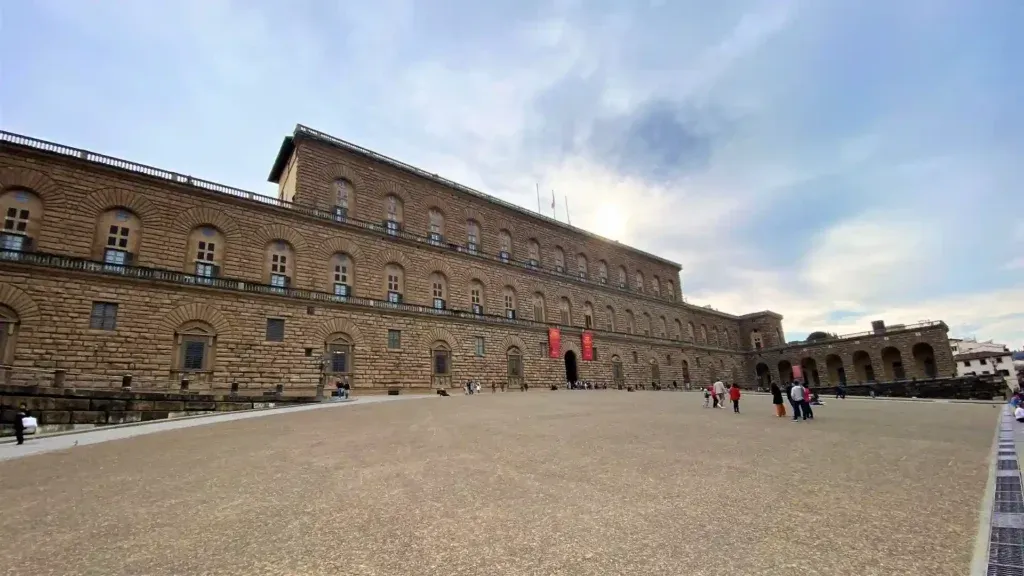
Palazzo Vecchio still works as Florence's town hall, so ceremonies and council events sometimes close single rooms or the whole museum at short notice. The Comune di Firenze posts these closures in its visitor notices, and a check the day before saves a wasted trip.
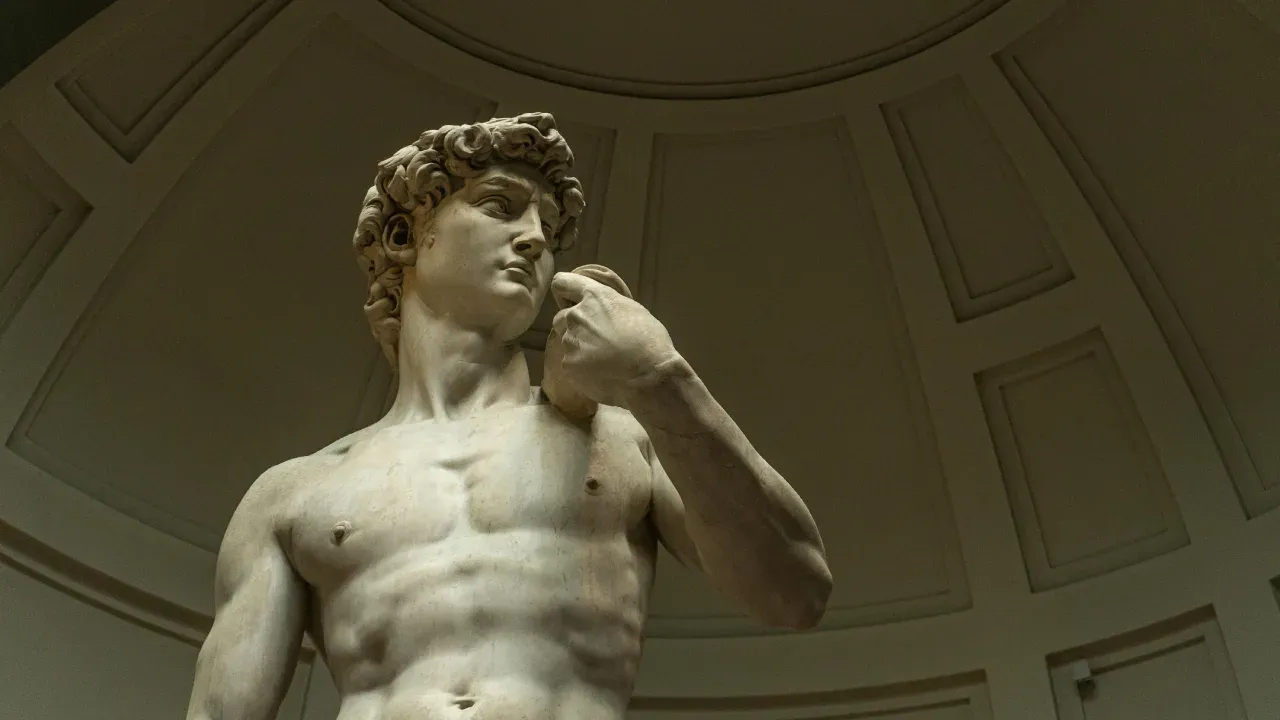
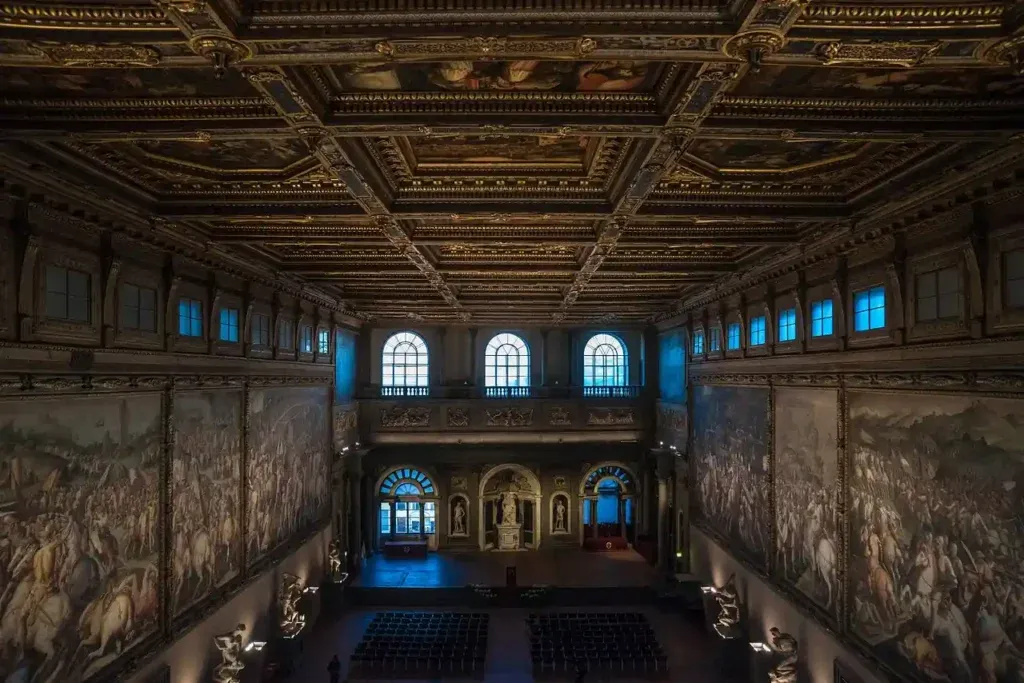
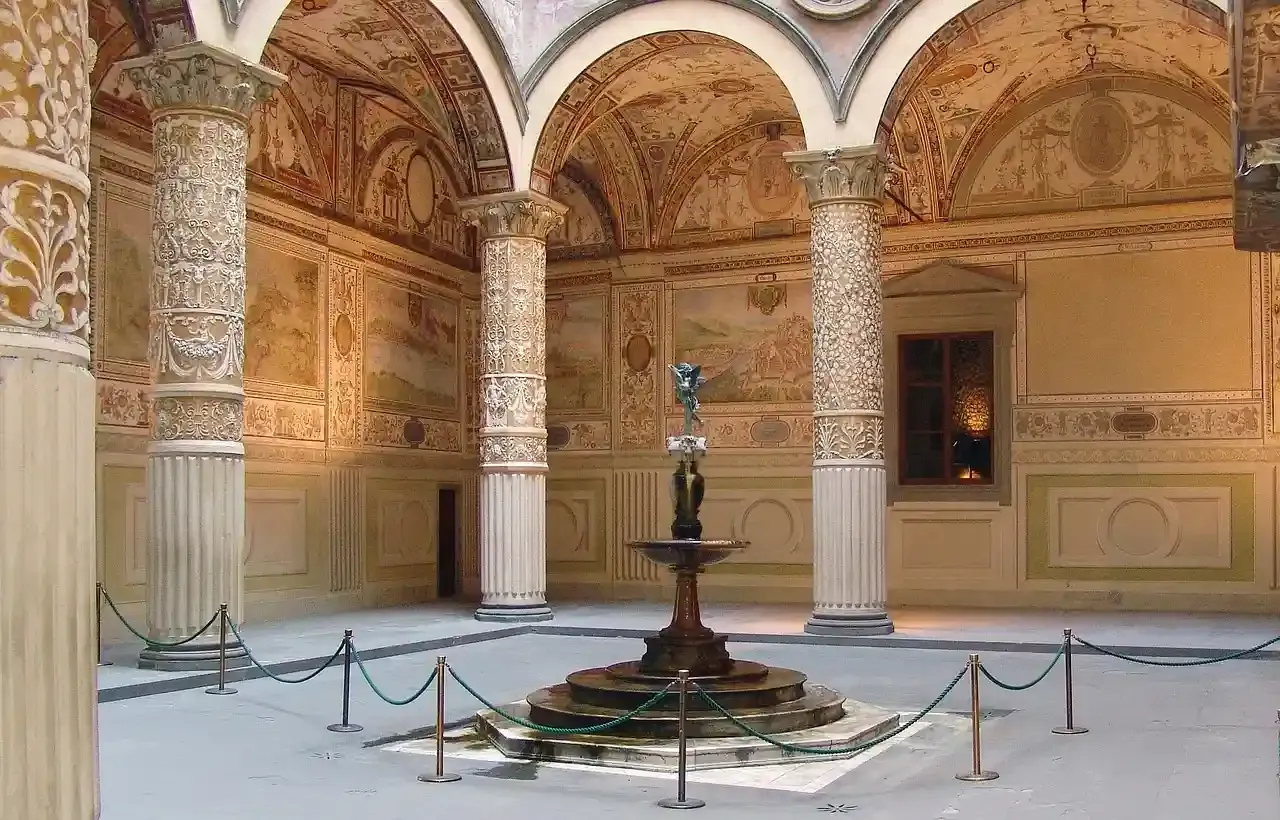
The visit opens in the Cortile di Michelozzo, where Vasari's workshop painted views of Austrian cities on the walls for the 1565 wedding of Francesco I and Johanna of Austria. Stairs lead up to the Salone dei Cinquecento, built in 1494 for the 500 members of the Great Council and remodeled for Cosimo I by Vasari, who raised its ceiling and covered the wall where Leonardo had begun the unfinished Battle of Anghiari. Michelangelo's Genius of Victory stands in the same hall, and the tiny windowless Studiolo of Francesco I opens off one end.
Upstairs, the Apartments of the Elements and the rooms of Eleonora di Toledo show the Medici at home, with the private chapel Bronzino frescoed for her. Donatello's original Judith and Holofernes stands in the Sala dei Gigli, next door to the Hall of Geographical Maps, where walnut cabinets painted with maps were meant to hold Cosimo I's collections. The Palazzo Vecchio Museum page covers the rooms in more depth.
The Arnolfo Tower is a separate climb of 418 steps with its own ticket, and it closes whenever it rains. Anyone who wants that view over Piazza della Signoria needs to plan for it apart from the tickets on the Palazzo Vecchio page.
2. Pitti Palace, paintings, court rooms and Boboli
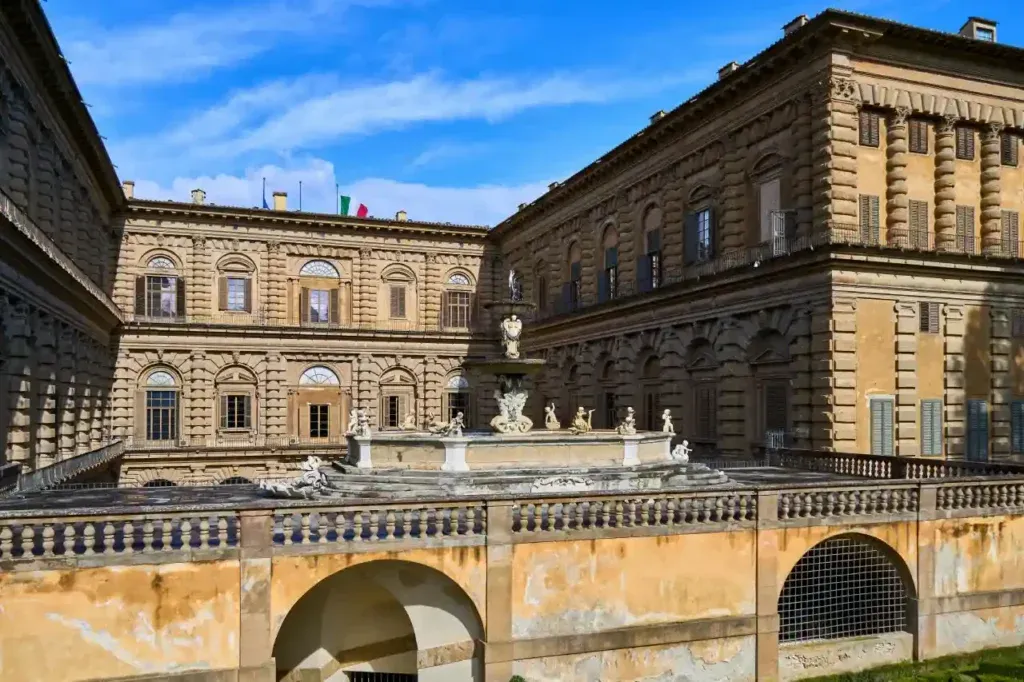
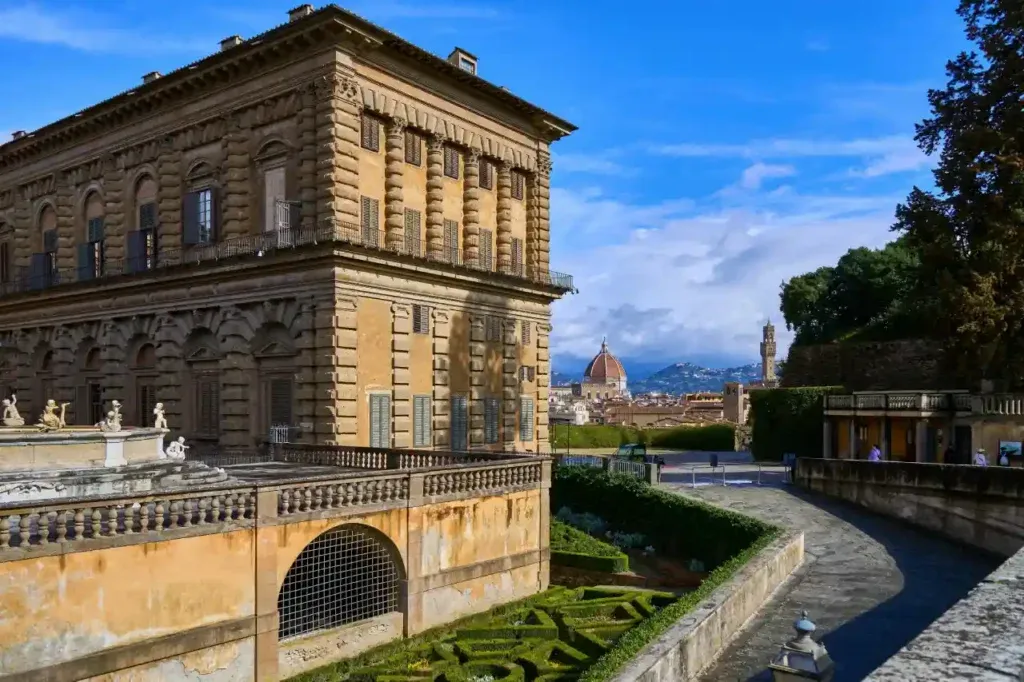
Luca Pitti, a banker, began the palace in the mid-1400s at the foot of the Boboli hill. Cosimo I and Eleonora di Toledo bought it in the mid-16th century and made it the Medici residence, the Habsburg-Lorraine grand dukes followed in 1737, and the Savoy kings of Italy lived here from 1865. A single ticket covers the main palace collections, and the Royal Apartments need a dedicated Pitti ticket.
On the first floor, the Palatine Gallery shows about 500 paintings that the Habsburg-Lorraine picked from the Medici collections and hung frame to frame in the state rooms. Raphael has more paintings here than in any other museum, next to Titian, Tintoretto, Caravaggio and Rubens, and Pietro da Cortona frescoed the ceilings of the Planet Rooms between 1640 and 1647. The 14 rooms of the Royal Apartments open only on accompanied 30-minute tours, which start every half hour from 10:00 to 17:00 and must fall on the same day as the Palatine Gallery visit.
The second floor holds two museums. The Gallery of Modern Art covers Italian painting and sculpture from Neoclassicism to the 1930s. The Museum of Costume and Fashion, founded in 1983 as Italy's first state museum of fashion history, owns more than 15,000 pieces and rotates them for conservation, while the restored 16th-century burial clothes of Cosimo I, Eleonora and their son Garzia stay on permanent display.
Three closures affect visits in autumn 2026. The Treasury of the Grand Dukes, on the ground floor, has been shut for maintenance since 3 February 2026 with no reopening date, the Room of the Iliad stays closed until 25 October 2026, and restorers are working through the Quartiere del Volterrano wing of the Palatine Gallery.
Boboli Gardens fill the hill behind the palace, with classical and Renaissance statues, the Buontalenti Grotto, the Neptune Fountain and an 18th-century Kaffeehaus. Gates at Via Romana, Porta Romana and Forte di Belvedere also let visitors in and out. The room-by-room list of what to see at Pitti Palace goes further into each collection.
How the Medici moved from one palace to the other
Cosimo I de' Medici moved his court from the family palace on Via Larga into the Palazzo della Signoria in May 1540, which made clear that the Medici now ran the city. Around a decade later he and Eleonora di Toledo bought the Pitti palace across the river and turned it into the family residence. Once the court had left, the old seat of government took the name it keeps today, Palazzo Vecchio, the Old Palace.
In 1565 Giorgio Vasari built the enclosed corridor that runs from Palazzo Vecchio through the Uffizi and over the Ponte Vecchio to Pitti, so the family could cross Florence without walking its streets.
Seeing both palaces on the same day
Both palaces fit into one day as long as the plan follows their closing days. Palazzo Vecchio works on booked time slots and the Royal Apartments at Pitti on timed tours, so a margin of an hour between the two visits keeps the second one unhurried.
- Tuesday, Wednesday, Friday, Saturday or Sunday. Start at Pitti when it opens at 8:15 and book a morning slot for the Royal Apartments. Have lunch in the Oltrarno, walk 12 minutes back across the Ponte Vecchio and enter Palazzo Vecchio in the early afternoon, which leaves time before its 19:00 closing. The tower shuts at 17:00, so anyone climbing it goes up first.
- Thursday. Reverse the order. Palazzo Vecchio opens at 9:00 and closes at 14:00, tower included, and Pitti runs until 18:30 with its ticket office closing an hour earlier and the last Royal Apartments tour at 17:00.
- Monday. Pitti Palace is closed, so the day suits Palazzo Vecchio alone. Boboli stays open on Mondays other than the first and last of the month and makes a good afternoon after the museum.
- First Sunday of the month. Pitti and Boboli are free for everyone but take no reservations, so queues replace time slots. Palazzo Vecchio is free that day only for residents of the Metropolitan City of Florence.
Adding Boboli to the day takes another two hours at least. In November to February the gardens close at 16:30 and stop admitting visitors an hour before, so a winter plan puts the garden before the palace.